
A slower retirement is not necessarily about doing less. It is about creating better rhythms.
In the Texas Hill Country, that rhythm might begin with a quiet morning, a walk through town, or a weekly market visit that gives shape to the days ahead. It might continue with a well-organized pantry, a refrigerator filled with ingredients at their peak, and a kitchen designed to make cooking feel natural rather than burdensome.
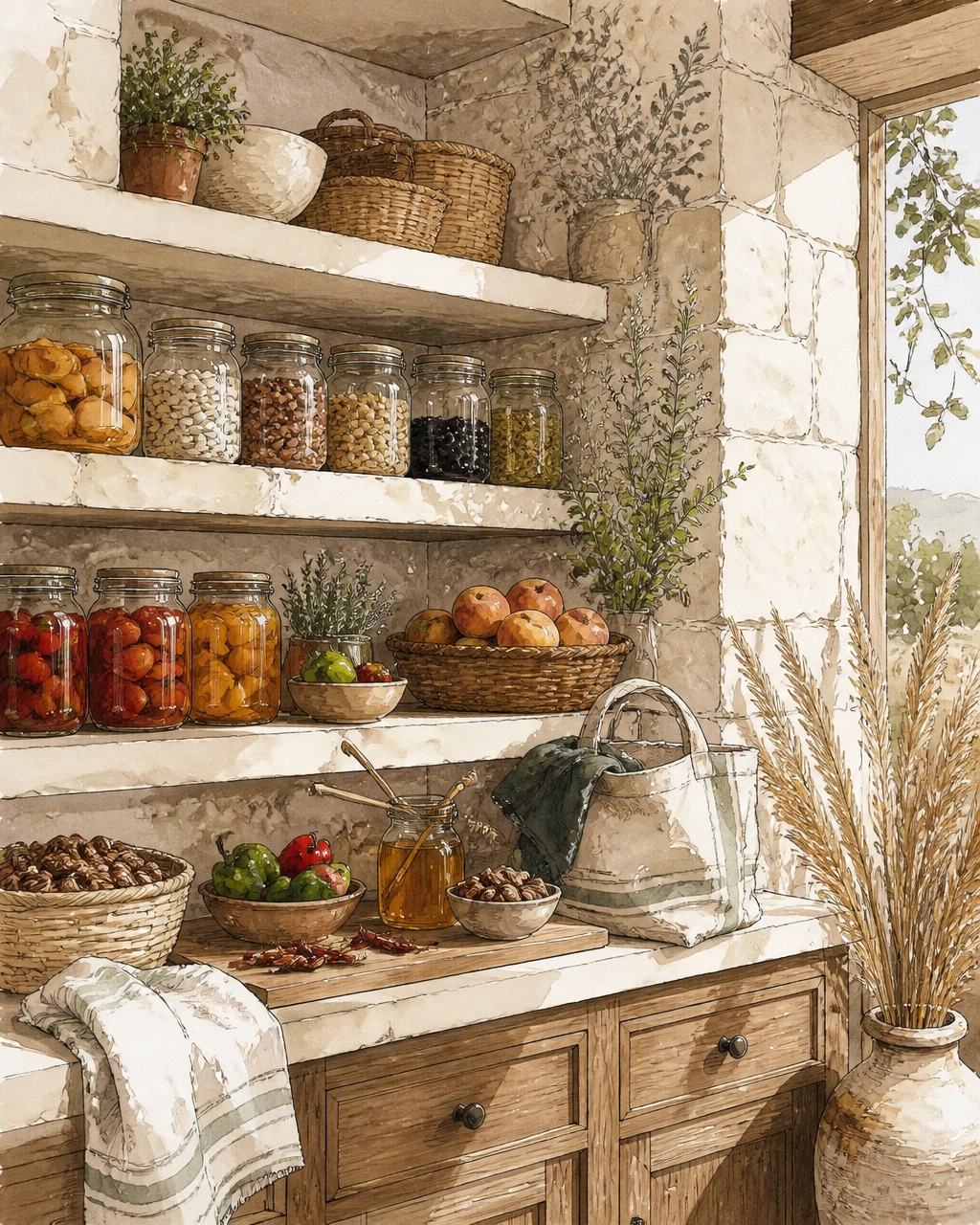
For affluent retirees, the pantry can become more than a storage closet. It can be part of the home’s architecture and part of the lifestyle itself: a place that supports gracious hosting, thoughtful shopping, seasonal cooking, and fewer unnecessary trips into town.
The goal is not to accumulate more. It is to make what you already have work beautifully.
A Pantry That Reflects the Way You Want to Live
The best pantry design starts with lifestyle rather than square footage.
Do you enjoy preparing breakfast slowly, with coffee and fresh fruit? Do family members visit for long weekends? Do you prefer to shop once or twice a week and cook from what looks best? Do you like keeping the ingredients for a relaxed dinner on hand, even when the nearest grocery store is a drive away?
These questions matter more than whether your pantry is a walk-in or a series of tall cabinets.
A well-planned Hill Country pantry may include:
- Open shelving for everyday staples
- Pull-out drawers for grains, beans, and baking ingredients
- A dedicated area for preserves, sauces, honey, and spices
- A “use soon” basket for produce that needs attention
- Space for serving platters, linens, and entertaining supplies
- A small appliance station for coffee equipment, a slow cooker, or a mixer
- Room for insulated market bags and reusable containers
- A secondary refrigerator or freezer when the home and lifestyle justify it
The overall effect should be calm and visible. You should be able to see what you have without opening six cabinets or moving three containers.
For a retirement home, accessibility is part of luxury. Drawers and pull-out shelves can make daily cooking easier. Good lighting can help with reading labels and preparing ingredients. Wide paths between the pantry, kitchen, and outdoor living areas can make hosting more comfortable for everyone.
The pantry should support the life you want: not become another space to manage.

Build a Market Habit, Not a Shopping Chore
A farmers-market habit works best when it becomes a gentle weekly ritual.
Rather than arriving with an ambitious list of specific recipes, consider shopping for categories:
- One or two vegetables at their peak
- A dependable fruit for breakfast or dessert
- Fresh herbs
- Eggs, cheese, or another protein
- A local preserve, sauce, or baked item
- One ingredient that is unfamiliar or especially appealing
This approach gives the kitchen flexibility. A basket of peppers might become a roasted side dish, a breakfast filling, or part of a simple soup. A large quantity of peaches might be enjoyed fresh for several days, then sliced for the freezer. Greens can become salads, sautés, or additions to a grain bowl.
The rhythm matters more than the recipe.
The Hill Country Farmers’ Market listing notes that the market offers indoor space, accepts cash and cards, and provides online ordering through the Foraged platform. For some retirees, ordering ahead may make a market trip more efficient while still preserving the pleasure of picking up local food in person.
Market schedules and vendor offerings change, so check directly before planning a large purchase. In a region with considerable seasonal variation, a flexible habit is more useful than a rigid calendar.
Texas A&M AgriLife Extension’s fall vegetable gardening guide for Texas is also a helpful reference for understanding how cool-season crops fit into the broader Central Texas growing rhythm.
Think in “Fresh,” “Stored,” and “Ready”
One way to make a pantry feel effortless is to divide it into three working categories.
Fresh
These are the ingredients that should be used within several days: tender greens, berries, herbs, ripe tomatoes, peaches, and other delicate market finds.
Keep them visible. A shallow basket or open refrigerator drawer can prevent fresh ingredients from disappearing behind jars and containers.
Stored
These are the reliable foundations of the kitchen:
- Beans and lentils
- Rice and grains
- Pasta
- Canned tomatoes
- Dried chiles and herbs
- Flour and baking supplies
- Nuts and seeds
- Oils and vinegars
- Broths and shelf-stable staples
Store dry goods in airtight containers and keep them away from direct sunlight, excess heat, and moisture. In a Texas summer, an interior pantry is generally more dependable than a garage, attic, or unconditioned storage room.
Ready
These are ingredients that have already been made useful:
- Roasted peppers
- Frozen sliced fruit
- Cooked beans
- Washed greens
- Chopped herbs
- Homemade stock
- A jar of prepared sauce
- Portions of a finished meal
The “ready” category is where a slower life becomes practical. A little preparation after market day can make the rest of the week feel remarkably light.

Design for the Texas Climate
Hill Country homes must work with heat, dust, changing weather, and sometimes considerable distances between errands.
That makes storage conditions important. Keep pantry staples in the coolest, driest part of the home, away from ovens, sunny windows, and exterior walls that receive intense afternoon heat. Oils, nuts, whole-grain flours, and other ingredients that can lose quality over time deserve particular attention.
A few practical design decisions can help:
- Choose doors and drawers that close securely
- Use washable baskets for onions, potatoes, and winter squash
- Keep a small cooler or insulated tote near the garage entry
- Install task lighting beneath shelves and above prep areas
- Use clear containers for frequently used dry goods
- Label bulk ingredients with purchase dates
- Keep a donation or sharing shelf for unopened items you will not use
The point is not to create a commercial kitchen. It is to make the home’s food system easy to understand.
That clarity is especially valuable when a spouse, house manager, visiting family member, or friend is helping in the kitchen.
Cook by Composition Instead of Complicated Recipes
A well-stocked pantry allows you to cook by composition: a foundation, something fresh, something satisfying, and one strong flavor.
For example:
- Beans, greens, roasted peppers, and cornbread
- Rice, black-eyed peas, seasonal vegetables, and herbs
- Pasta, tomatoes, mushrooms, and a handful of greens
- Grilled vegetables, eggs, local cheese, and warm tortillas
- Roasted winter squash, lentils, pecans, and a bright dressing
This style of cooking is particularly well suited to retirement because it leaves room for appetite and energy. You can prepare a generous base early in the week and change its presentation over several meals.
It also makes entertaining less theatrical. When friends arrive unexpectedly, you are not starting from nothing. You may already have a basket of fruit, a prepared spread, a loaf of bread, and the ingredients for a simple meal.
The home feels hospitable without requiring a production.
Preserve the Season Without Turning It Into a Project
Preserving food can sound ambitious, but it does not have to involve a full afternoon of canning.
Simple methods are often enough:
- Freeze sliced peaches or berries on a tray before transferring them to containers
- Chop herbs and freeze them in small portions
- Roast surplus tomatoes or peppers and refrigerate or freeze them
- Blanch and freeze vegetables when you have more than you can use
- Store homemade soup or stock in measured portions
- Dry citrus zest or herbs for later use
If you choose to can or preserve foods using more involved methods, follow current food-safety instructions and use tested procedures. The Hill Country Alliance’s local food resource guide is also a useful reminder that food, community, and local stewardship are closely connected throughout the region.
As the Alliance wrote, “Whether you are in a place of need or a place of plenty, don’t forget your local food banks.” A thoughtful pantry can include room for sharing, whether that means donating unopened staples, passing along extra garden produce, or preparing a meal for a neighbor.
Let the Kitchen Become Part of Retirement
A beautiful pantry is not valuable because it looks impressive. It is valuable because it reduces friction.
It helps you buy with intention, store with confidence, cook with flexibility, and welcome people without unnecessary stress. It turns local ingredients into part of the home’s weekly rhythm rather than an occasional indulgence.
For those considering a move to the Texas Hill Country, the kitchen deserves a place in the larger relocation conversation. A home should support not only the view from the porch, but also the way mornings begin, groceries arrive, meals come together, and family gathers around the table.
Texas Hill Country Retirement is a lifestyle and retirement resource for people exploring the region’s homes, communities, and everyday possibilities. For professional guidance on the financial considerations of relocating and building a retirement lifestyle, learn more about Portafolio Capital Management dba Mau Sanchez Capital. Readers should consult a qualified tax professional for individualized guidance on any tax-related questions.
Schedule a private meeting with a fiduciary financial advisor today by calling (512) 593-8380 or by visiting: https://calendly.com/portafoliocapital/15min
Portafolio Capital Management dba Mau Sanchez Capital is a Registered Investment Adviser. This content is for informational purposes only and does not constitute investment advice or a solicitation to buy or sell any security. Advisory services are provided only pursuant to a written advisory agreement.
This article may include stories, scenarios, and perspectives created or assisted by artificial intelligence. Although the individuals and circumstances described may be fictional, the topics are intended to reflect real financial, personal, and lifestyle issues that retirees and individuals commonly face.
The content is provided to encourage readers to consider different perspectives that may affect their retirement, regardless of whether they are currently planning, approaching retirement, or already retired. It is intended for general educational and informational purposes only and should not be interpreted as personalized investment, financial, tax, legal, medical, or retirement-planning advice.
Individual circumstances vary. Readers should independently verify any information presented and consult appropriately qualified professionals before making financial or personal decisions. No advisory, professional, or client relationship is created through the use of this website.
Leave a Reply