
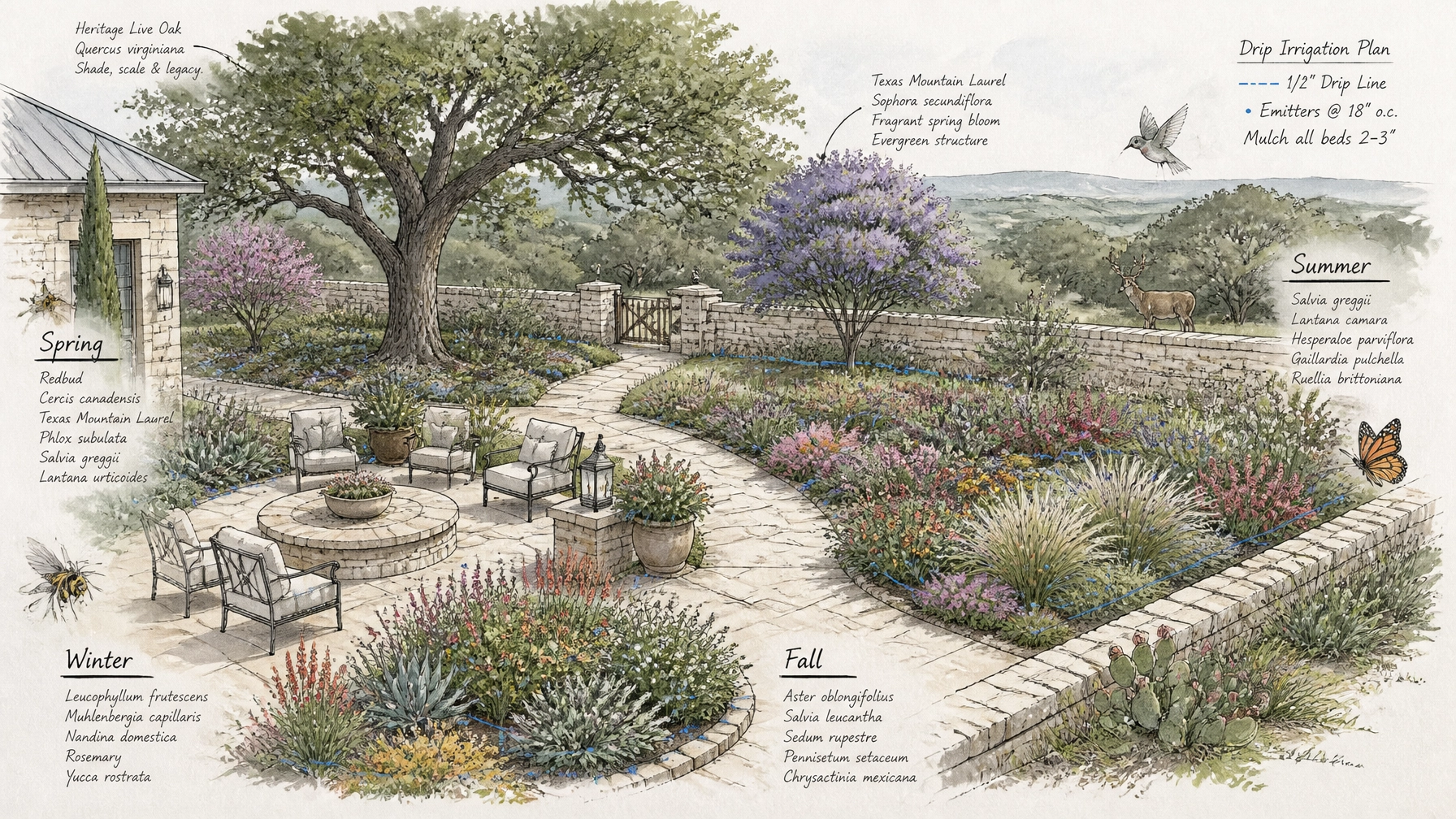
A well-designed garden can become one of the great pleasures of retiring in the Texas Hill Country. It can frame a limestone home, soften a patio, attract hummingbirds, provide herbs for dinner, and give you a reason to walk outside every morning.
It can also become an expensive, demanding project if every plant requires constant watering, pruning, protection, and replacement.
The goal is not to eliminate garden care altogether. The goal is to create a residential garden that is beautiful, seasonally interesting, and manageable enough to enjoy rather than supervise. That begins with choosing plants suited to the Hill Country, organizing them by conditions, and designing maintenance into the garden from the start.
As the Native Plant Society of Texas explains, its database allows homeowners to search for plants by ecoregion, light, water needs, soil type, bloom season, and wildlife benefit. That kind of site-specific thinking is more useful than choosing plants simply because they look attractive at a nursery.
Start With the Garden You Actually Have
Before selecting a single plant, spend time observing the property.
Note where the sun falls in the morning and afternoon. Identify areas beneath live oaks or Ashe junipers, places where water collects after a storm, and rocky stretches where the soil is shallow. Pay attention to views from the kitchen, bedroom, veranda, and favorite seating areas. A garden should be planned around the way you live: not just the shape of the lot.
For a retirement property, also consider practical comfort:
- Can you reach the principal planting beds without navigating steep or uneven ground?
- Are there shaded places to sit during warmer months?
- Would raised beds make herbs and flowers easier to tend?
- Can a gardener, landscaper, or family member access the irrigation controls easily?
- Are paths wide, stable, and well lit?
- Is the most beautiful part of the garden visible from indoors?
The Hill Country Texas Master Gardeners’ demonstration garden offers a useful regional reference because its plant listings include information such as exposure, water use, bloom period, mature size, and deer considerations.
“Come see what’s blooming in our garden and what plants do well in our Hill Country.” : Hill Country Texas Master Gardeners
That is a practical philosophy for residential planning: observe what thrives locally, then adapt those lessons to your own soil, sun, and lifestyle.

Illustration: A site-assessment sketch for matching planting areas to sunlight, drainage, and everyday living patterns.
Build the Garden in Layers
A polished Hill Country garden generally benefits from several planting layers rather than one long row of similar shrubs.
1. Canopy and small trees
Trees create the long-term structure of the garden. A Texas redbud can provide spring color, while a Texas mountain laurel offers evergreen presence and fragrant purple blooms. A properly placed live oak or other suitable native oak can provide shade and a sense of permanence.
Tree placement deserves patience. Consider mature width, root zones, views, utility lines, and the changing pattern of shade. A small tree may look lonely when first planted, but filling every gap with shrubs often creates crowding later.
2. Evergreen and seasonal shrubs
Shrubs form the garden’s backbone. Texas sage, dwarf yaupon holly, agarita, and other well-adapted choices can provide structure even when flowering perennials are between bloom cycles.
American beautyberry offers a different kind of seasonal interest. Its spring flowers are modest, but its purple berries can become a striking feature later in the year. The Master Gardeners’ guidance notes that beautyberry is best suited to semi-shaded locations and should not be pruned in spring because it flowers on new growth.
3. Perennials and flowering accents
Perennials create the garden’s rhythm. Autumn sage, flame acanthus, Blackfoot daisy, four-nerve daisy, mealy blue sage, and Texas lantana can bring color and pollinator activity without demanding the same level of attention as a formal annual bed.
Plant in groups or “drifts” instead of scattering one specimen of everything. Repetition looks more intentional, makes the garden easier to maintain, and helps pollinators locate nectar sources.
4. Grasses and groundcovers
Native and adapted grasses add movement, texture, and winter structure. Little bluestem, Gulf muhly, Lindheimer muhly, and side-oats grama can keep a garden visually active after many flowers have faded.
Groundcovers can soften the edges of paths and walls, but choose them carefully. A plant that spreads pleasantly in one setting may become difficult to contain in another. The NPSOT Native Plant Database can help you filter choices by growth form, water requirement, light, soil, bloom season, and wildlife value.
Plan for Four Seasons, Not One Dramatic Month
A garden designed around one spring bloom can feel finished by early summer. A better residential garden assigns each season a role.
Spring: fresh color and fragrance
Spring is an ideal time for Texas redbud, Texas mountain laurel, columbine, winecups, coreopsis, and early sages. This is also when many homeowners are most eager to spend time outdoors, so place the most fragrant or colorful plants near paths, entrances, and breakfast terraces.
Summer: durable color and pollinators
Summer demands plants that can handle heat while still providing visual interest. Flame acanthus, autumn sage, red yucca, lantana, and Blackfoot daisy can create a lively palette of coral, red, yellow, and purple.
Avoid placing every high-color plant in one exposed bed. Combine flowering plants with grasses, silver foliage, and stone to create a composition that remains attractive even when bloom intensity fluctuates.
Fall: berries, asters, and grasses
Fall is when beautyberry, fall aster, Mexican mint marigold, and muhly grasses can carry the garden. Seedheads should not automatically be removed as soon as flowers fade. They may add texture, offer food for birds, and provide architectural interest through the cooler months.
Winter: form and quiet structure
Winter interest comes from evergreen shrubs, sculptural yucca and agave forms, persistent berries, grass silhouettes, and the shapes of trees and stonework. A garden does not need to be full of flowers to be beautiful.

Illustration: Layering plants by height and function creates a garden with structure, color, habitat, and easier maintenance.
Use Water Where It Matters Most
Water-wise gardening is not simply choosing drought-tolerant plants. It is also about putting water in the right place and avoiding waste.
New plants need regular attention while they establish roots. Once established, many Hill Country natives and adapted plants can require much less supplemental irrigation, particularly when they are matched to well-drained soil and the correct amount of sun.
Consider:
- Grouping plants with similar water needs together.
- Using drip irrigation for beds rather than relying on broad overhead spray.
- Watering deeply and less frequently once plants are established.
- Applying a suitable layer of mulch while keeping it away from trunks and stems.
- Directing runoff toward useful planting areas where appropriate.
- Keeping thirsty plants close to the home or patio, where they are easier to monitor.
- Reserving lawn for areas that are genuinely used.
Water zones also make professional maintenance more efficient. A gardener can quickly identify which beds need attention rather than treating the entire property as if every plant has identical requirements.
Design for Pollinators Without Creating Extra Work
A pollinator-friendly garden does not need to look wild or untidy. Repeated plant groups, defined paths, limestone edging, and restrained color combinations can make a habitat garden feel highly intentional.
Choose plants with overlapping bloom periods. Autumn sage and flame acanthus can support hummingbirds, while sages, asters, lantana, coneflowers, and mistflowers provide nectar for bees and butterflies. Include a few plants that offer seeds, berries, or shelter after flowering.
A small water source may also be appealing, but it should be designed with maintenance in mind. A shallow basin that is easy to clean is generally more practical than a complicated feature that requires frequent servicing.
Limit unnecessary pesticide use and ask any landscape service provider about an integrated approach. The objective is a healthy, balanced garden: not a perfectly sterile one.
Plan for Deer Before They Choose the Palette
Deer pressure can vary considerably from one neighborhood, ranch property, or wooded lot to the next. No plant should be treated as universally deer-proof.
Still, a deer-aware strategy can reduce disappointment. Place aromatic, textured, spiny, or commonly deer-resistant plants along property edges and travel routes. Options often used in Hill Country gardens include cenizo, agarita, red yucca, yaupon holly, rosemary, autumn sage, flame acanthus, and certain ornamental grasses.
Protect newly planted trees and shrubs while they establish. Temporary cages may be less glamorous than a replacement project, but they are often worthwhile. Observe what deer browse on your property, keep notes, and adjust future purchases accordingly.
Make the Garden Enjoyable to Maintain
The best retirement garden includes maintenance zones.
Keep frequently visited areas: such as the patio border, herb garden, and front walk: compact and accessible. Place larger naturalistic plantings farther from the home, where seasonal pruning can happen on a less urgent schedule.
Choose hardscape that supports the lifestyle you want:
- A stable path for morning walks.
- A shaded bench for reading.
- A terrace for wine and conversation.
- A raised bed for herbs.
- A discreet storage area for tools.
- Comfortable seating positioned to observe birds and changing blooms.
A garden can also support a flexible division of labor. You may want to handle small tasks such as harvesting rosemary or deadheading a favorite sage while delegating tree work, irrigation checks, seasonal cutbacks, and large-scale pruning.

Illustration: A seasonal garden journal showing how color, berries, grasses, and evergreen structure carry interest through the year.
A Simple Planning Sequence
For a new or renovated garden, move in stages:
- Map the site. Record sun, shade, slopes, soil depth, drainage, views, and deer activity.
- Choose the garden’s purpose. Decide whether it is primarily for entertaining, quiet walks, pollinators, herbs, views, or a blend.
- Install structure first. Address paths, seating, walls, trees, irrigation, and drainage before filling beds.
- Create planting zones. Separate dry full-sun areas from shaded or moderately moist locations.
- Choose a restrained palette. Repeat a manageable group of native and adapted plants.
- Add seasonal accents. Use perennials, grasses, berries, and fragrance to extend interest.
- Review after one full year. Move plants that are struggling, crowding, or receiving the wrong amount of sun.
A thoughtful garden is part of the larger retirement lifestyle. It can make a home feel settled, create reasons to invite friends over, and turn ordinary routines into something more restorative. As you plan a move or renovation in the region, the Texas Hill Country Retirement lifestyle resources can help you think through the broader choices surrounding community, home, recreation, and daily life.
For families also considering how a future home, landscape, and outdoor lifestyle fit within their broader retirement picture, Portafolio Capital Management dba Mau Sanchez Capital can provide professional guidance about investment management and retirement income planning.

Illustration: A comfortable residential garden designed for outdoor enjoyment, practical access, and limited routine upkeep.
Schedule a private meeting with a fiduciary financial advisor today by calling (512) 593-8380 or by visiting: https://calendly.com/portafoliocapital/15min
Portafolio Capital Management dba Mau Sanchez Capital is a Registered Investment Adviser. This content is for informational purposes only and does not constitute investment advice or a solicitation to buy or sell any security. Advisory services are provided only pursuant to a written advisory agreement.
This article may include stories, scenarios, and perspectives created or assisted by artificial intelligence. Although the individuals and circumstances described may be fictional, the topics are intended to reflect real financial, personal, and lifestyle issues that retirees and individuals commonly face.
The content is provided to encourage readers to consider different perspectives that may affect their retirement, regardless of whether they are currently planning, approaching retirement, or already retired. It is intended for general educational and informational purposes only and should not be interpreted as personalized investment, financial, tax, legal, medical, or retirement-planning advice.
Individual circumstances vary. Readers should independently verify any information presented and consult appropriately qualified professionals before making financial or personal decisions. No advisory, professional, or client relationship is created through the use of this website.
Leave a Reply