
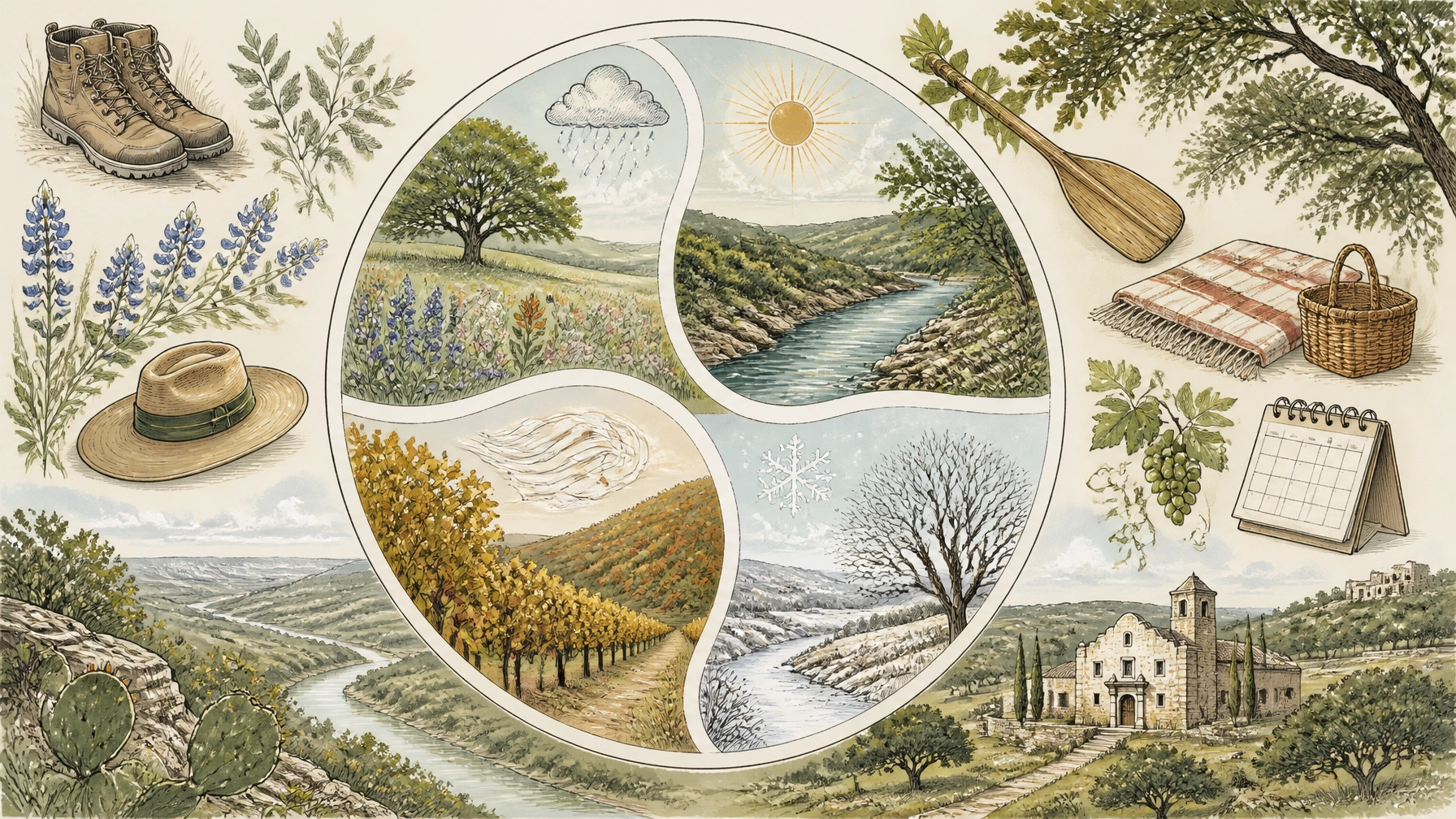
Retirement in the Texas Hill Country is often imagined through a collection of beautiful moments: coffee on a shaded porch, a morning walk beneath live oaks, a spring drive surrounded by wildflowers, or an evening glass of wine after a day outdoors.
The reality is even better when your routines are designed around the region’s changing weather.
The Hill Country offers a long outdoor season, but it is not uniform. Summer heat can reshape a walking schedule. Spring rain can alter a trail or river outing within hours. A winter cold snap may arrive after several mild days. Fall brings comfortable temperatures and festivals, but conditions can still vary from one town or elevation to another.
For retirees and pre-retirees relocating to the region, a weather-aware calendar can help turn outdoor recreation into a dependable lifestyle rather than an occasional activity.
Spring: Plan Around Wildflowers, Rain, and Rapid Changes
Spring is one of the most appealing times to explore the Hill Country. From March through May, temperatures generally become comfortable for hiking, scenic drives, outdoor dining, and vineyard visits. Wildflowers often begin appearing in mid-March, with bluebonnets commonly reaching their most reliable displays in early to mid-April. The exact timing depends on winter moisture, spring rainfall, and temperatures.
The Lady Bird Johnson Wildflower Center’s bluebonnet guidance is a useful resource before planning a dedicated wildflower outing. Bloom timing can differ significantly between roadsides, open fields, parks, and higher-elevation areas.
Spring is also one of the wetter periods of the year. April and May can bring heavy showers and thunderstorms, sometimes after several dry days. That means the best outdoor plan is often flexible:
- Schedule longer walks, garden visits, and scenic drives on mornings with stable forecasts.
- Keep a rain jacket and waterproof footwear available.
- Avoid committing to a creekside picnic or river outing when storms are developing upstream.
- Recheck trail conditions before leaving, even if the weather near your home appears clear.
- Build in an indoor alternative, such as a gallery, restaurant, or tasting room.
Texas Parks and Wildlife Department pages for individual parks provide current alerts and trail updates. For example, Pedernales Falls State Park warns that flash flooding can cause river conditions to change quickly and advises visitors to call before visiting when weather may affect access.
That caution is especially important for retirees who prefer a comfortable pace. A weather-aware lifestyle is not about avoiding adventure; it is about choosing the right setting for the day.

Summer: Move Outdoor Life to the Edges of the Day
Summer in the Hill Country is beautiful, but midday heat should influence how you use your time. June through August can bring temperatures in the 90s, with occasional stretches reaching 100 degrees or more. Even when humidity is lower than in coastal Texas, direct sun and reflected heat from limestone surfaces can make a short outing feel demanding.
Many retirees find that summer does not require giving up outdoor routines. It simply requires moving them:
- Walk before breakfast rather than after lunch.
- Choose shaded trails, neighborhood paths, or landscaped grounds.
- Reserve golf, tennis, and pickleball for early morning or evening.
- Use the hottest hours for lunch, reading, errands, wellness appointments, or a quiet afternoon at home.
- Plan lake and river activities when reliable access, shade, and comfortable facilities are available.
- Carry water and avoid treating a familiar route as automatically safe during extreme heat.
A porch, courtyard, or shaded garden can become part of the summer lifestyle. The goal is to create outdoor spaces that remain useful even when a long hike is not practical. A ceiling fan, comfortable seating, shade trees, and a nearby water station can make a home feel connected to the landscape without requiring a strenuous excursion.
Before heading out, check the National Weather Service Austin/San Antonio office for heat advisories, point forecasts, storm chances, and hazardous weather information. Summer storms may be isolated, but a localized downpour can still affect roads, low-water crossings, and river areas.
For lake and river plans, conditions matter as much as temperature. Drought can lower water levels and affect boat ramps or recreation access, while heavy rain can create unsafe currents. A beautiful forecast at your starting point does not guarantee calm conditions along the entire route.
Fall: Make Space for Festivals, Harvest, and Longer Excursions
Fall is often the most naturally social outdoor season in the Hill Country. September may still feel like summer, but October and November typically bring cooler mornings, more comfortable afternoons, and a welcome opportunity to spend longer periods outside.
This is an excellent time to expand your radius:
- Take a historic downtown walk followed by lunch.
- Plan a vineyard visit or harvest-season outing.
- Explore a new golf course or country club.
- Invite friends for a scenic drive and outdoor dinner.
- Try a longer trail while temperatures are more forgiving.
- Attend a local festival without the intense heat of midsummer.
Fall weather can still be changeable. September and October may bring rain, and a cold front can quickly alter an outdoor event or evening reservation. Layers are more useful than a single heavy jacket: a light sweater, vest, scarf, or weather-resistant shell can keep a pleasant day comfortable from morning through sunset.
This is also a good season to evaluate how your future community supports everyday spontaneity. Are restaurants, trails, parks, wineries, and cultural venues close enough to use regularly? Are roads comfortable to navigate after dark? Is there a shaded place to rest during a downtown stroll? These practical details often matter more than a community’s amenities list.
If you are comparing communities or towns, our guide to pickleball, golf, and tennis clubs in the Hill Country can help frame the recreational side of that decision.

Winter: Use Mild Days, Prepare for Cold Snaps
Hill Country winters are often gentler than those in many parts of the country. Daytime temperatures can be comfortable for walking, outdoor lunches, scenic drives, and golf. Nights, however, may fall near or below freezing, and occasional Arctic fronts can bring a sharp change in conditions.
Winter planning works best when you distinguish between an ordinary cool day and a true cold-weather event:
- Keep outdoor plans flexible when a freeze is forecast.
- Watch for icy conditions on shaded bridges, steps, and elevated walkways.
- Protect outdoor plumbing, plants, and sensitive equipment before a hard freeze.
- Dress in layers so a sunny afternoon remains enjoyable.
- Choose south-facing patios and sheltered trails when wind is strong.
- Use clear winter days for quiet hikes, photography, stargazing, or a relaxed drive through the hills.
A cold snap does not have to end your routine. It may simply shift the routine indoors or shorten the outing. Communities with fitness facilities, walking-friendly interiors, social rooms, wellness options, and nearby dining can make winter transitions easier.
The National Weather Service’s local forecast tools are particularly helpful during winter because conditions may shift substantially within 24 hours. A forecast that begins near 70 degrees can end with freezing temperatures overnight.

Build a Simple Weather-Aware Outdoor Routine
A practical Hill Country calendar does not need to be complicated. Before planning an outing, consider five questions:
- What is the temperature during the hours I will actually be outside?
- Is rain expected nearby or upstream?
- Could heat, wind, mud, or a freeze affect the trail or road?
- Are the lake, river, park, or trail conditions current?
- What is my comfortable backup plan?
For trail conditions, check the specific Texas State Parks page and look for active alerts, closures, and trail updates. For river conditions, the USGS Guadalupe River monitoring station near Kerrville provides current water data. These resources are more useful than relying only on an old travel guide or a general regional forecast.
You can also organize your personal calendar around “best-use” windows:
- Spring mornings: wildflowers, walking, photography, and scenic drives.
- Summer mornings and evenings: golf, trails, patios, and water activities.
- Fall afternoons: festivals, vineyards, downtown exploration, and longer excursions.
- Winter midday: hiking, outdoor lunches, and peaceful sightseeing.
That rhythm is one of the quiet advantages of relocating to the Hill Country. Retirement does not have to mean filling every day with activities. It can mean having enough flexibility to choose the right activity for the day’s conditions.
As you evaluate a move, consider not only the home or community but also how easily your preferred routines fit into the seasons. A retirement lifestyle feels more sustainable when the landscape, weather, amenities, and pace of daily life work together.
If you are exploring the broader relocation decision, the Texas Hill Country Retirement residency checklist offers another practical starting point. For general educational information about financial planning and investment management considerations related to a move, Mau Sanchez Capital can help families evaluate broader retirement strategy questions. For guidance specific to your personal tax situation, consult a qualified tax professional.
Schedule a private meeting with a fiduciary financial advisor today by calling (512) 593-8380 or by visiting: https://calendly.com/portafoliocapital/15min
Portafolio Capital Management dba Mau Sanchez Capital is a Registered Investment Adviser. This content is for informational purposes only and does not constitute investment advice or a solicitation to buy or sell any security. Advisory services are provided only pursuant to a written advisory agreement.
This article may include stories, scenarios, and perspectives created or assisted by artificial intelligence. Although the individuals and circumstances described may be fictional, the topics are intended to reflect real financial, personal, and lifestyle issues that retirees and individuals commonly face.
The content is provided to encourage readers to consider different perspectives that may affect their retirement, regardless of whether they are currently planning, approaching retirement, or already retired. It is intended for general educational and informational purposes only and should not be interpreted as personalized investment, financial, tax, legal, medical, or retirement-planning advice.
Individual circumstances vary. Readers should independently verify any information presented and consult appropriately qualified professionals before making financial or personal decisions. No advisory, professional, or client relationship is created through the use of this website.
Leave a Reply