
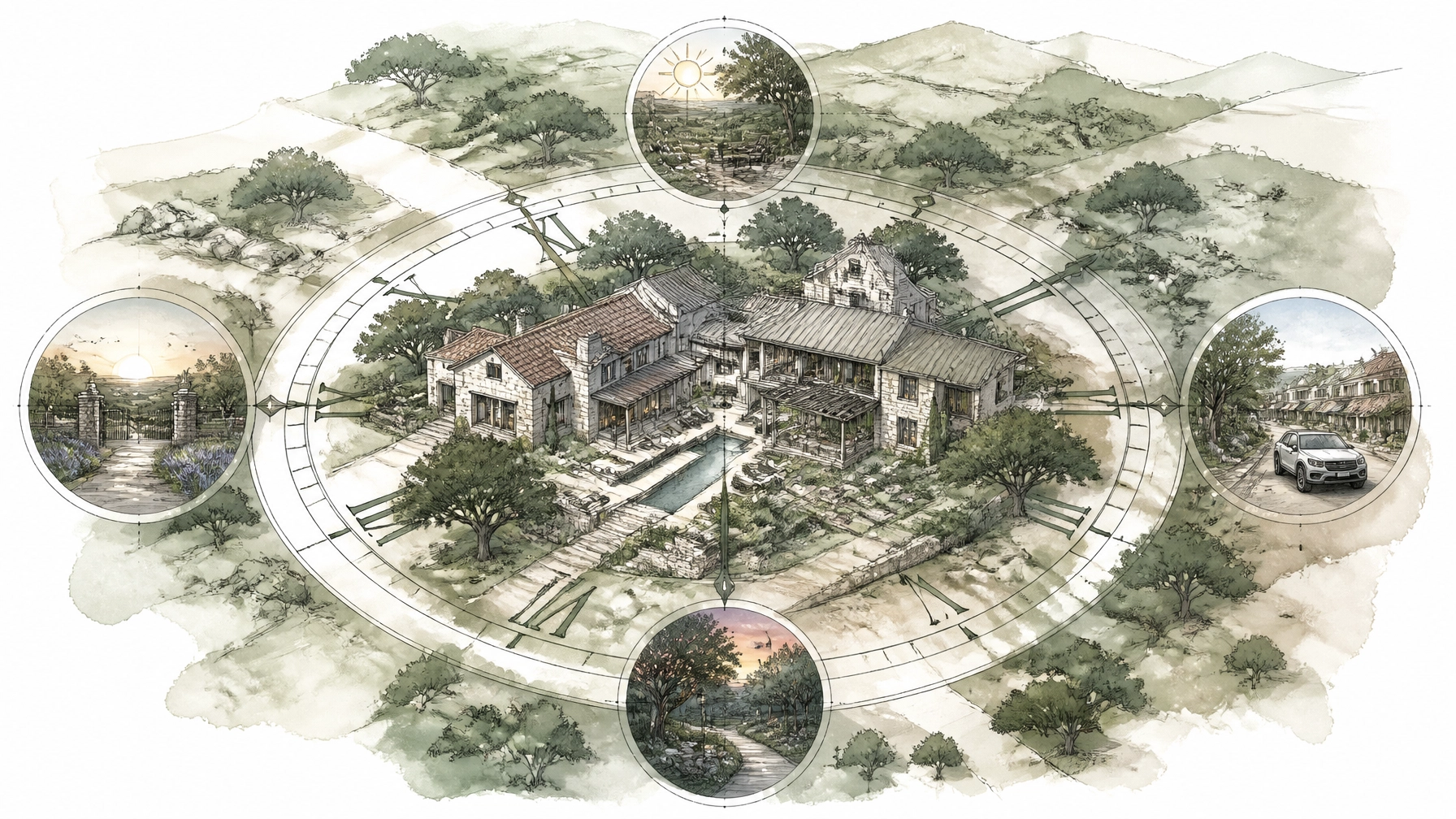
A beautiful listing can create an immediate emotional response. Limestone walls, mature oaks, a wide porch, and a long view across the hills may look like the perfect setting for retirement.
But a home is more than its photographs. It is also the route you drive, the heat you experience, the errands you complete, the sounds you hear, and the feeling you have when you return home after dark.
That is why affluent retirees and pre-retirees may benefit from an arrival-to-evening test: a structured, one-day visit designed to evaluate how a specific property performs throughout an ordinary day.
This is not a replacement for a professional inspection, survey, title review, or other due diligence. It is a lifestyle test: a way to move beyond the showing and understand whether the property supports the retirement life you actually want.
Before the Visit: Prepare to Test the Home, Not Just Tour It
Choose a normal weekday when possible. A weekday reveals commuter traffic, delivery patterns, business activity, and neighborhood noise that may not appear during a quiet weekend showing.
Bring:
- Comfortable walking shoes
- A phone with a compass, camera, and speed-test app
- A small notebook or printed scorecard
- A thermometer and humidity meter, if available
- Questions for the seller, agent, neighbors, and property manager
- A list of errands or activities you would realistically complete
Ask permission before photographing private areas, neighbors, or security equipment. You are evaluating the property thoughtfully: not conducting an inspection without authorization.
Before arriving, review the local forecast through the National Weather Service Austin/San Antonio office. Weather conditions will influence what you can test, especially during the summer, but even a mild day can reveal useful information about shade, orientation, access, and noise.
7:30–9:00 a.m.: Test the Commute and Arrival
Start the day from the direction you would most likely travel after moving. This might be from Austin, San Antonio, a regional airport, a medical appointment, or the home of family members.
Do not simply estimate the drive time from a map. Drive the route.
Observe:
- How easily you find the property entrance
- Whether the final roads are paved, narrow, steep, or poorly marked
- How long you travel without services or cell coverage
- Whether school traffic, construction, or commuter congestion affects the route
- How comfortable the drive feels for regular medical appointments, dining, or shopping
Once you arrive, remain in the vehicle for a few minutes. What do you notice before entering the home?
Is the gate easy to identify? Is there room for visitors or service vehicles to turn around? Can you see approaching traffic? Does the entrance feel private and welcoming, or confusing and exposed?
For a rural or acreage property, ask about emergency access, road maintenance, well or septic systems, propane, and backup power. These questions do not make the property less luxurious. They help you understand the infrastructure supporting the luxury.

9:00–11:30 a.m.: Walk the Property as You Would Live There
Begin with the paths you would use every day: not the formal entry shown during the listing appointment.
Walk from:
- The driveway to the front door
- The garage or parking area to the kitchen
- The primary suite to outdoor living spaces
- The house to trash, mail, storage, or guest areas
- The home to any pool, garden, workshop, or walking trail
Pay attention to slope, steps, uneven stone, drainage, and the distance between frequently used spaces. A sprawling property may be attractive, but the daily experience should remain comfortable as your preferences and mobility change over time.
Look at the home from different angles. Which rooms face the morning sun? Which windows will receive the strongest afternoon exposure? Where would you sit with coffee, read a book, host family, or enjoy a quiet glass of wine?
Also note the soundscape. Stand quietly for several minutes with the doors and windows open. Listen for road noise, landscape equipment, neighboring properties, dogs, construction, aircraft, or other recurring activity.
A home can feel peaceful during a 30-minute showing and entirely different after several hours of observation.
11:30 a.m.–1:30 p.m.: Put the Home Through the Heat and Light Test
Midday is when a property begins to reveal how it handles the Texas Hill Country climate.
Walk the exterior again. Identify areas that are comfortably shaded and those that are exposed. Mature trees, covered porches, deep roof overhangs, awnings, and thoughtfully placed outdoor spaces can make a meaningful difference in how usable a property feels.
Inside, check:
- Whether rooms feel evenly cooled
- Which spaces become warm or stuffy
- The location of thermostats and return vents
- The age and condition of HVAC equipment
- Window coverings and west-facing glass
- The amount of natural light versus glare
- Whether the kitchen, office, and primary suite remain comfortable
Ask for recent summer utility bills and HVAC service records. If the property has multiple floors or large expanses of glass, ask whether the system is zoned.
The National Weather Service regularly provides heat-related information for Central and South Texas. You do not need to wait for an extreme heat day to ask a practical question: Where will I naturally spend time when the afternoon is hot?

Then have lunch at home if possible. Sit on the porch or patio. Use the kitchen. Imagine a normal Tuesday rather than a special occasion.
Is the refrigerator close to the garage? Is there enough counter space? Would groceries be easy to unload? Does the outdoor dining area stay pleasant, or does it become too bright and hot?
1:30–3:30 p.m.: Run Real Errands
This part of the test is easy to overlook. A retirement home should support the rhythm of ordinary life, not only weekends and holidays.
Leave the property and complete two or three realistic errands:
- Pick up groceries or prescriptions
- Visit a bank, post office, or package center
- Stop at a garden or hardware store
- Drive to a medical office or urgent-care facility
- Pick up coffee or a casual lunch
- Visit a nearby park, club, gallery, or winery
Time the round trip. Consider whether the drive feels relaxing or burdensome. Note where you would go for fresh food, household services, exercise, and healthcare.
For a deeper review of the region’s medical access, see Hill Country Healthcare Access: A Guide to Top Hospitals, Specialists, and Concierge Medicine.
On the way back, pay attention to road conditions and navigation. Would a visiting family member find the property easily? Would a contractor or delivery driver have trouble locating it?
3:30–5:00 p.m.: Verify Connectivity, Service, and Everyday Convenience
Test the property’s digital infrastructure from several rooms and outdoor areas.
Check:
- Cell service indoors and outside
- Voice-call reliability
- Upload and download speeds
- Video-call stability
- Internet dead zones
- Location of the modem and router
- Whether a backup connection is practical
The FCC National Broadband Map can provide address-level information about reported providers, technologies, and advertised speeds. Treat that information as a starting point, not a guarantee. Call the provider directly and ask whether installation is available at the exact address, what equipment is required, and how service performs during outages.
If you expect to work with financial professionals, manage a business, host family video calls, or use connected home systems, connectivity is part of the property’s livability.
This is also the right time to consider security. Look at the approach to the home, lighting around doors and garages, visibility from major windows, gate operation, and the ability to receive deliveries securely.
Ask:
- Is there one entrance or more than one route out?
- Is the driveway easy to navigate after dark?
- Are exterior lights controlled by timers, sensors, or a smart system?
- Can guests and service providers be identified before entry?
- How is mail handled?
- Does the neighborhood or property association provide security services?
These are practical questions: not signs that a property is unsafe. They help determine whether the home feels comfortable when you are alone, traveling, or hosting guests.

5:00–7:00 p.m.: Test Traffic, Noise, and Dinner
Return during the evening commute. Stand outside with windows open, then closed. Listen from the primary bedroom, living room, office, and outdoor seating area.
Notice:
- Traffic volume
- Neighbor activity
- Music or event noise
- Barking dogs
- Landscape or construction equipment
- Road and gate sounds
- Changes in light and visibility
If the property is near a growing corridor, ask about planned roads, development, or commercial construction. Request copies of applicable property-owner association documents and restrictions. A peaceful view today may not remain unchanged if development is planned nearby.
Have dinner either at the home or at a nearby restaurant. If dining out, choose the kind of place you would visit regularly: not only a destination restaurant for special occasions.
When you return, walk the final stretch back to the house. This is the most revealing part of the day.
How does the path feel under low light? Are steps and changes in grade visible? Is the porch welcoming? Can you hear the road? Do you feel oriented, secure, and pleased to be home?

The Evening Scorecard: Separate Emotion from Evidence
Before leaving, score the property from one to five in each category:
- Arrival and commute
- Driveway and emergency access
- Daily walkability
- Light and shade
- Heat comfort
- Noise and privacy
- Errand convenience
- Internet and cell service
- Security and evening lighting
- Kitchen, dining, and hosting experience
- Healthcare and essential services
- Overall feeling at the end of the day
Then write three short answers:
- What felt better than expected?
- What would become irritating after six months?
- What requires professional verification before making an offer?
A one-day property test cannot replace formal due diligence. It can, however, prevent a common mistake: purchasing a home for its arrival moment without understanding its full daily rhythm.
For families considering a move, Texas Hill Country Retirement offers lifestyle resources covering community fit, healthcare access, housing, and relocation. When the property decision becomes part of a larger retirement transition, Mau Sanchez Capital can help families think through the relationship between housing choices, liquidity, income planning, and long-term portfolio design.
“The right home should feel good when you arrive: and continue to work for you when the day is ordinary.”
Schedule a private meeting with a fiduciary financial advisor today by calling (512) 593-8380 or by visiting: https://calendly.com/portafoliocapital/15min
Portafolio Capital Management dba Mau Sanchez Capital is a Registered Investment Adviser. This content is for informational purposes only and does not constitute investment advice or a solicitation to buy or sell any security. Advisory services are provided only pursuant to a written advisory agreement.
This article may include stories, scenarios, and perspectives created or assisted by artificial intelligence. Although the individuals and circumstances described may be fictional, the topics are intended to reflect real financial, personal, and lifestyle issues that retirees and individuals commonly face.
The content is provided to encourage readers to consider different perspectives that may affect their retirement, regardless of whether they are currently planning, approaching retirement, or already retired. It is intended for general educational and informational purposes only and should not be interpreted as personalized investment, financial, tax, legal, medical, or retirement-planning advice.
Individual circumstances vary. Readers should independently verify any information presented and consult appropriately qualified professionals before making financial or personal decisions. No advisory, professional, or client relationship is created through the use of this website.
Leave a Reply