
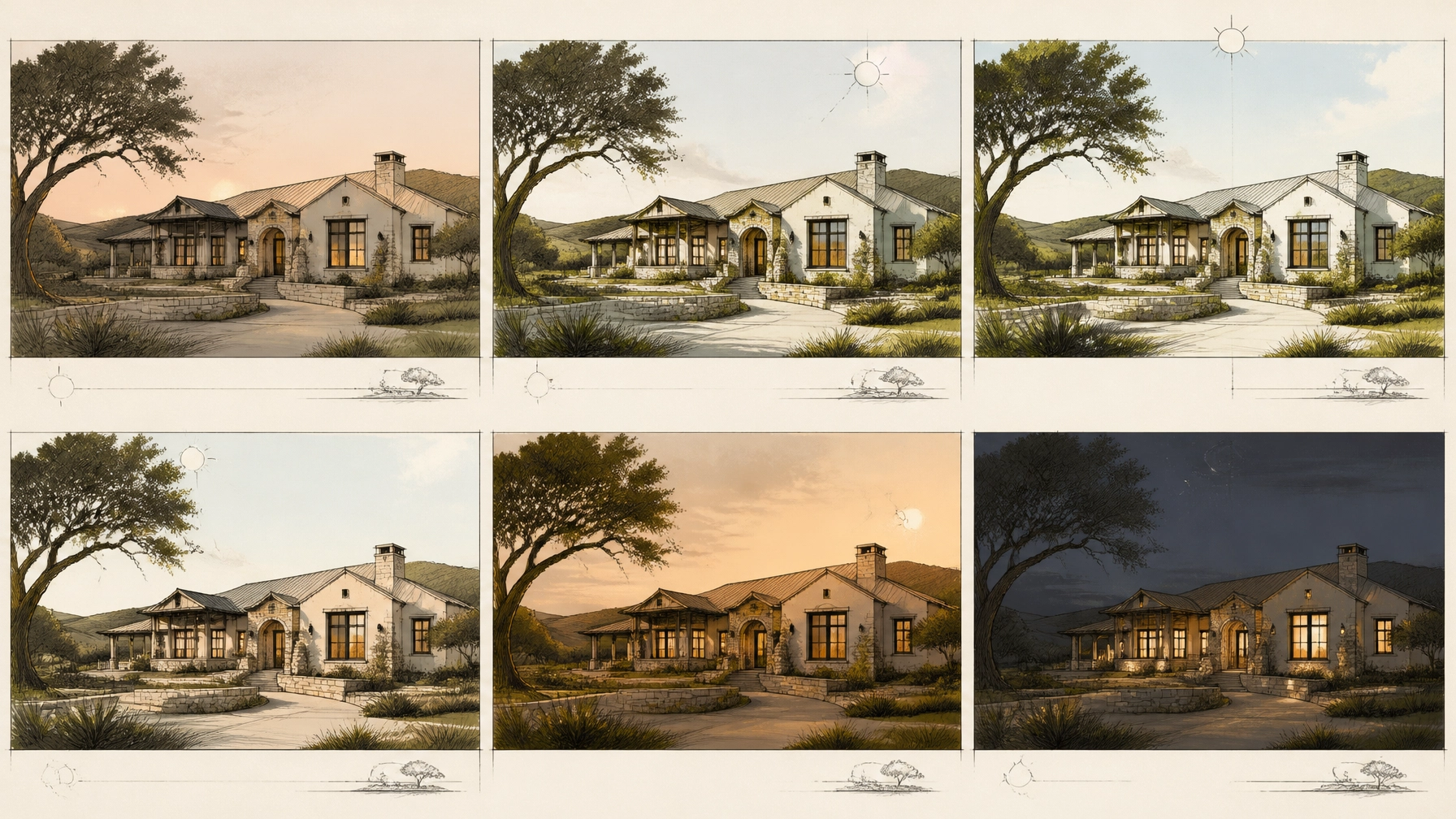
A luxury home can look perfect during a 30-minute showing and feel entirely different once you live there. The breakfast room may be beautifully bright at 9 a.m. but uncomfortably glaring at noon. A living room may offer a dramatic evening view while becoming hot and difficult to use every afternoon. A bedroom may feel private in daylight but exposed once interior lights come on after dark.
That is why serious home shoppers should evaluate more than square footage, finishes, and scenery. They should study how the property receives and manages light across an entire day.
This is the Hill Country light study: a practical, time-of-day method for understanding a home’s brightness, shadows, heat, glare, privacy, views, and evening atmosphere before making a major relocation decision.
Why a One-Day Light Study Matters
Light is not a static feature. It moves across the property, changes the character of rooms, and affects how comfortably you can use them.
The U.S. Department of Energy describes daylighting as “the use of windows or skylights for natural lighting and temperature regulation.” Its guidance emphasizes that window placement, orientation, glazing, and interior design all influence how sunlight enters a home. Read the Department of Energy’s overview of daylighting.
For retirees, the issue is especially practical. You may spend more time at home, use outdoor spaces throughout the day, host friends for dinner, work from a home office, or prefer a quiet reading area with soft, dependable light. A home should support those routines, not merely photograph well during an open house.
The goal is not to find the brightest home. It is to find a home with the right pattern of light for the way you want to live.
Before You Visit: Prepare a Simple Light-Study Kit
Bring a few basic tools:
- A phone with a compass app
- A notebook or digital worksheet
- Sunglasses, if you are sensitive to glare
- A phone camera for documenting shadows and reflections
- A tape measure, if permitted
- The listing floor plan
- A note of the weather, date, and approximate time
Ask the listing agent whether you can visit more than once. Ideally, conduct one morning visit and one afternoon or evening visit. If that is not possible, spend enough time at the property to observe several transitions rather than rushing from room to room.
You do not need to produce an architectural report. You are creating a realistic picture of daily life.

Dawn: Notice the First Light and the Quietest Views
Begin outside before the home becomes busy with activity. Look at the eastern horizon and observe what may block early light:
- Mature trees
- Neighboring roofs
- Hillsides
- Fences or walls
- Future construction areas
- Tall landscaping near bedrooms
Then enter the home and identify which rooms receive the first light. An east-facing bedroom may be appealing if you enjoy waking naturally, while it may be less comfortable if you prefer a darker room later into the morning.
Pay attention to how quickly the home brightens. Does the kitchen receive gentle illumination, or does direct sunlight create sharp reflections on countertops and appliances? Does the primary bedroom feel peaceful, or would early brightness require blackout shades?
Dawn is also a useful time to study privacy. Windows that feel completely private in the dark may reveal direct sightlines to neighboring homes once the sky begins to brighten.
Morning: Test the Rooms You Will Actually Use
Morning light should be judged from the places where you will spend time, not only from the center of the room.
Stand at:
- The kitchen sink
- The breakfast table
- A favorite reading chair
- The bathroom mirror
- A potential home-office desk
- The main bedroom’s sitting area
Ask yourself whether the light is useful or intrusive. Soft, angled light can make a breakfast room inviting. Direct light into your eyes while standing at the sink may become tiring over time.
If a home office is important, examine the computer position carefully. A window directly behind the screen may create a bright background and eye strain. A window directly in front of the screen may create reflections. Side lighting is often easier to manage, but the best solution depends on the room’s layout and window coverings.
Also note what happens when shades are lowered. If glare forces you to cover the windows every morning, the home may not provide as much usable daylight as the listing suggests.
Noon: Look for Dark Zones, Uneven Light, and Heat
Midday is when many homes reveal their most important light patterns.
Walk through the house without turning on artificial lights. Which spaces remain comfortable and naturally bright? Which hallways, corners, or interior rooms feel dependent on overhead fixtures?
A home with large windows can still have dim areas if the floor plan is deep, rooms are enclosed, or exterior trees block the light. Conversely, smaller windows can provide beautiful illumination when they are carefully placed and complemented by lighter interior surfaces.
Now check for heat. Sit quietly in rooms receiving direct sunlight. Touch: not excessively hot surfaces, but carefully observe: whether floors, furniture, or window areas feel warmer. Notice whether the air-conditioning is working harder in certain spaces.
The Pacific Northwest National Laboratory explains that direct-beam sunlight is associated with “glare and intense heating of surfaces,” while diffuse light can provide a more comfortable source of natural illumination. Review its guidance on shading and solar control for windows.
In the Texas Hill Country, this distinction matters. A dramatic wall of glass may create a beautiful connection to the landscape, but the home still needs a thoughtful way to control direct sun during warmer parts of the day.
Afternoon: Give the West Side Special Attention
Late afternoon is often the most revealing period for a home’s comfort.
West-facing windows receive low-angle light that can enter beneath overhangs and across rooms. That light may be beautiful, but it can also create:
- Reflections on televisions and computer screens
- Bright patches on floors and walls
- Heat around glass doors
- Discomfort in rooms used for reading or conversation
- A need for closed blinds during the hours you might otherwise enjoy the home
Stand where a sofa, dining table, or television would be placed. Look toward the windows and then look away. Do you need to squint? Does the room feel balanced, or is one bright opening dominating the space?
Exterior shading deserves close inspection. Deep porches, properly designed overhangs, pergolas, trees, and recessed windows can reduce direct sun while preserving views. Interior shades offer flexibility, but they may also reduce the visual connection to the outdoors.
Look beyond the current landscaping. A young tree may eventually provide shade, but it may not solve today’s heat or privacy issue. A mature tree may offer welcome relief, but it could also block a view or require ongoing maintenance.

Golden Hour: Separate a Beautiful View From a Usable Room
Golden hour is when many properties make their strongest emotional impression. The landscape softens, limestone walls warm, and the surrounding hills may appear especially inviting.
Enjoy that moment: but evaluate it carefully.
Ask:
- Can you see the view from the rooms where you will spend time?
- Does the late light improve the room or create glare?
- Is the view private, or does it include neighboring windows and roads?
- Will outdoor dining areas remain comfortable?
- Does the home’s layout encourage you to use the porch, terrace, or courtyard?
A compelling view should be considered together with privacy and usability. A lower window may frame the landscape beautifully but expose the living room to a nearby road. Clerestory windows, layered landscaping, and carefully positioned openings may offer a better balance between daylight and seclusion.
This is not a reason to dismiss a west-facing room automatically. It is a reason to understand what the light will ask of you.
Night: Study the Home From the Outside In
Return to the property after sunset if possible. Turn on the interior lights and walk around the exterior, maintaining appropriate respect for the occupants if the home is occupied.
From outside, notice:
- Which rooms are visible from the street or neighboring properties
- Whether the primary bedroom feels exposed
- How much privacy landscaping actually provides
- Whether porch lighting is comfortable or harsh
- How the entry path is illuminated
- Whether outdoor seating areas feel inviting after dark
Then evaluate the interior ambiance. A well-designed home should not rely on one bright ceiling fixture in every room. Look for layers: soft lamps, under-cabinet lighting, wall sconces, recessed lighting, and gentle exterior illumination.
Night also reveals a reverse version of the daytime privacy question. During the day, you may look out through a window and see trees, hills, or open space. At night, interior lighting can make the glass reflective and turn the room into a visible display from outside.
Consider whether you would be comfortable leaving shades open after dark. If not, determine whether the home has practical coverings that preserve some view while improving privacy.

Turn Your Observations Into a Decision
After the visit, score each major room from one to five in these categories:
- Morning usefulness : Does the light support your routines?
- Midday comfort : Is the room bright without feeling hot or gloomy?
- Afternoon glare : Can you use screens, read, or relax comfortably?
- Privacy : Can shades remain open when you want natural light?
- View quality : Is the view meaningful from the places you use?
- Evening ambiance : Does the room feel warm, calm, and welcoming after dark?
- Management burden : Will the home require frequent shade adjustments or ongoing landscape work?
Do not treat every concern as a deal-breaker. Some can be addressed with furnishings, window coverings, landscaping, or lighting improvements. Others: such as a fundamental privacy problem or a room that becomes unusable every afternoon: may be more difficult to change.
The purpose of the light study is to replace a momentary first impression with a fuller understanding of the home.
A Better Way to Choose Your Hill Country Home
For affluent retirees, the right home is not necessarily the one with the largest windows, the biggest view, or the most dramatic presentation. It is the property whose daily rhythms match your preferred pace.
A thoughtful light study can help you determine whether a home supports quiet mornings, comfortable afternoons, relaxed entertaining, and peaceful evenings. It can also give you better questions to bring to your real estate professionals, builders, architects, and home inspectors.
As you compare properties, keep lifestyle at the center. The ideal Hill Country residence should feel beautiful in photographs: but even better at 8 a.m., 2 p.m., 6 p.m., and after the last light fades.
For more resources about relocating and planning for life in the region, explore the Texas Hill Country Retirement home page, healthcare access in the Hill Country, and questions to ask before hiring a fiduciary in the Hill Country.
This article is intended as a general educational resource. For individualized tax guidance or questions about how any housing, relocation, or financial decision may affect your tax position, consult a qualified tax professional.
Schedule a private meeting with a fiduciary financial advisor today by calling (512) 593-8380 or by visiting: https://calendly.com/portafoliocapital/15min
Portafolio Capital Management dba Mau Sanchez Capital is a Registered Investment Adviser. This content is for informational purposes only and does not constitute investment advice or a solicitation to buy or sell any security. Advisory services are provided only pursuant to a written advisory agreement.
This article may include stories, scenarios, and perspectives created or assisted by artificial intelligence. Although the individuals and circumstances described may be fictional, the topics are intended to reflect real financial, personal, and lifestyle issues that retirees and individuals commonly face.
The content is provided to encourage readers to consider different perspectives that may affect their retirement, regardless of whether they are currently planning, approaching retirement, or already retired. It is intended for general educational and informational purposes only and should not be interpreted as personalized investment, financial, tax, legal, medical, or retirement-planning advice.
Individual circumstances vary. Readers should independently verify any information presented and consult appropriately qualified professionals before making financial or personal decisions. No advisory, professional, or client relationship is created through the use of this website.
Leave a Reply