
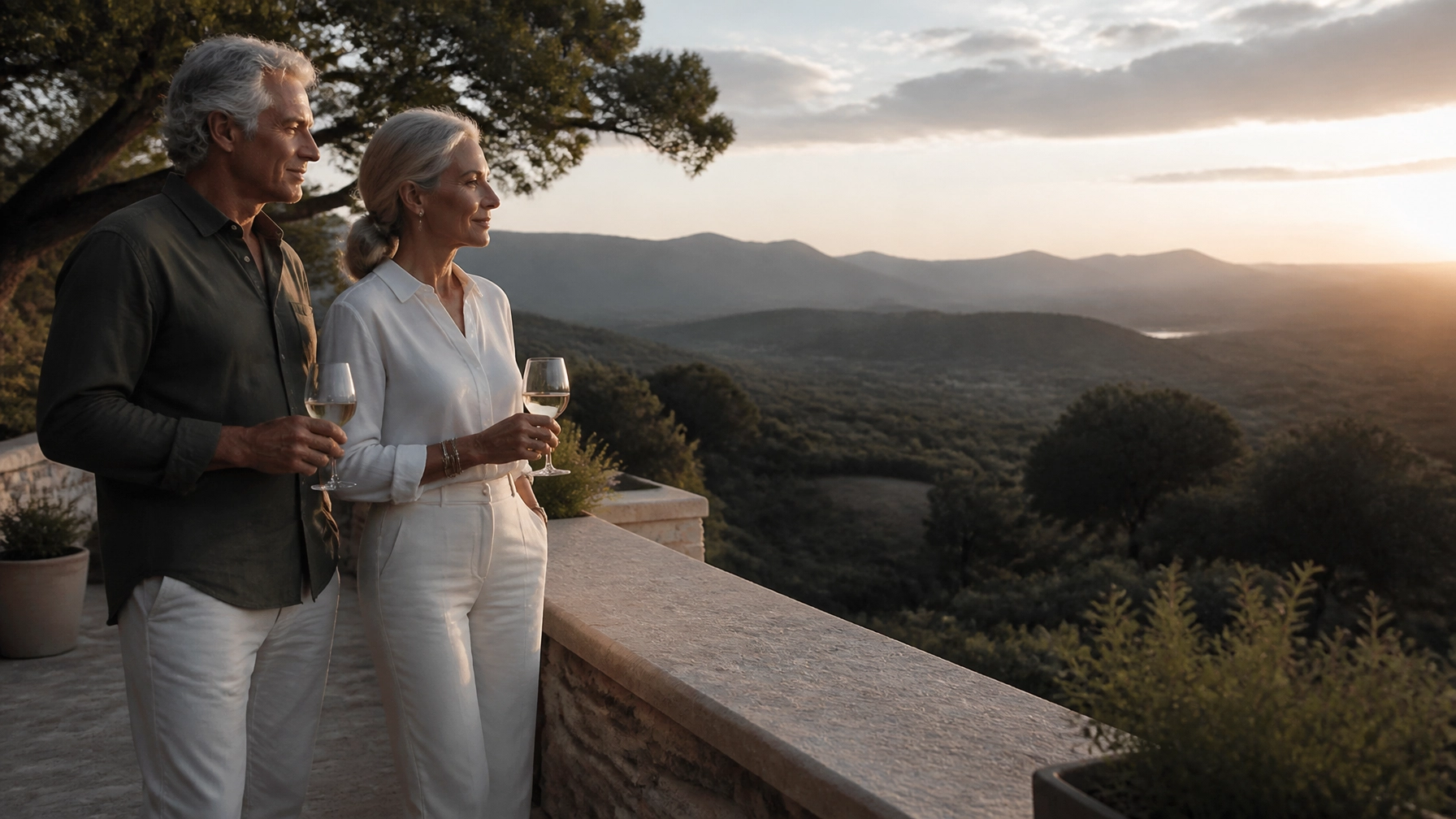
For decades, your identity has been synonymous with your title. The rhythm of your life was dictated by quarterly earnings, boardroom dynamics, and high-stakes decision-making. But as the sun sets on a distinguished corporate career, a new horizon emerges: one characterized by the rolling limestone hills, ancient live oaks, and the sophisticated serenity of the Texas Hill Country.
Stepping out of the C-suite isn't just a change of schedule; it’s a profound psychological and lifestyle transition. For many high-net-worth executives, the primary challenge isn't financial security: it's the sudden shift from a life of constant urgency to one of expansive leisure. Finding your footing in the Hill Country requires a strategic approach to identity, community, and purpose.
The Identity Shift: From CEO to Citizen
One of the most significant hurdles for retiring executives is the "identity cliff." When you no longer have a corporate banner to stand behind, the question of "who am I?" can feel surprisingly daunting. Research into executive transitions suggests that those who thrive in retirement are those who view it not as an "end," but as a pivotal career redesign.
In the Texas Hill Country, this redesign often takes the form of savoring the slow life. The region offers a unique "soft landing" for leaders. Here, you can trade the corner office for a sprawling "ranchette" or a luxury estate in Boerne, where the pace is measured and the focus shifts from performance to presence.

Finding Your New "Boardroom"
Most C-suite leaders don’t want to go from 100 mph to zero. Instead, they seek to redeploy their hard-earned skills in environments that offer more meaning and less stress. The Hill Country, with its proximity to the burgeoning business hubs of Austin and San Antonio, provides ample opportunity for high-level engagement.
1. Corporate and Non-Profit Boards
Many retired executives find deep satisfaction serving on the boards of regional banks, mid-market companies, or tech startups in the Silicon Hills. Furthermore, the Hill Country is home to world-class philanthropic organizations. Whether it's conservation efforts to protect the Edwards Aquifer or supporting the arts in Fredericksburg, your leadership acumen remains a highly valued asset.
2. Mentorship and Angel Investing
With Austin being a global epicenter for innovation, many former executives transition into angel investing or mentorship. Working with the next generation of founders at accelerators allows you to stay intellectually sharp while enjoying the flexibility of a nature-focused retirement living.
The Social Architecture of the Hill Country
In the corporate world, your network was built-in. In retirement, your social circle must be curated. The Texas Hill Country excels at providing spaces for high-level networking that feel organic rather than transactional.
From the exclusive fairways of Cordillera Ranch to the private tasting rooms of the winery culture in Fredericksburg, social life here is built around shared passions. Engaging in these communities allows you to connect with peers who understand the weight of executive responsibility and the joy of leaving it behind.

Lifestyle as a Strategy for Longevity
Retirement is the ultimate opportunity to optimize for health and wellness. The "active longevity" lifestyle is a cornerstone of Hill Country living. Whether it's a morning hike through Pedernales Falls or managing a boutique vineyard on your property, the physical engagement required by the new ranch life keeps the body and mind resilient.
High-net-worth retirees are increasingly looking for properties that facilitate this health-first mindset: estates with lap pools, home gyms, and expansive outdoor kitchens that make healthy, local living the default choice.
Strategic Financial Alignment for the 2026 Landscape
While the lifestyle shift is psychological, it must be supported by a robust financial framework. As we move into 2026, the fiscal landscape is evolving. For the former executive, this means ensuring that your wealth management strategy is as sophisticated as the corporate structures you once managed.
A transition of this magnitude requires a strategic wealth protection plan. It’s about more than just numbers; it’s about aligning your assets with your new purpose. This might involve re-evaluating your estate plan to include Hill Country land stewardship or optimizing your retirement income to support a lifestyle of frequent travel and local philanthropy.

Conclusion: Embracing the Second Act
Retiring from the C-suite is not a withdrawal from life; it is an advancement into a more intentional chapter. By moving to the Texas Hill Country, you are choosing a backdrop that rewards curiosity, values community, and respects the legacy you’ve built.
At Mau Sanchez Capital, we specialize in helping high-level professionals navigate this transition. From identifying the perfect luxury community to ensuring your financial strategy supports your lifestyle goals, we are here to help you design a retirement that is as impactful as your career.
Schedule a call with a fiduciary financial advisor today: https://calendly.com/portafoliocapital/15min
Portafolio Capital Management dba Mau Sanchez Capital is a Registered Investment Adviser. This content is for informational purposes only and does not constitute investment advice or a solicitation to buy or sell any security. Advisory services are provided only pursuant to a written advisory agreement.
For more information, visit https://portafoliocapital.com/ or call us at (512) 593-8380.
Leave a Reply