
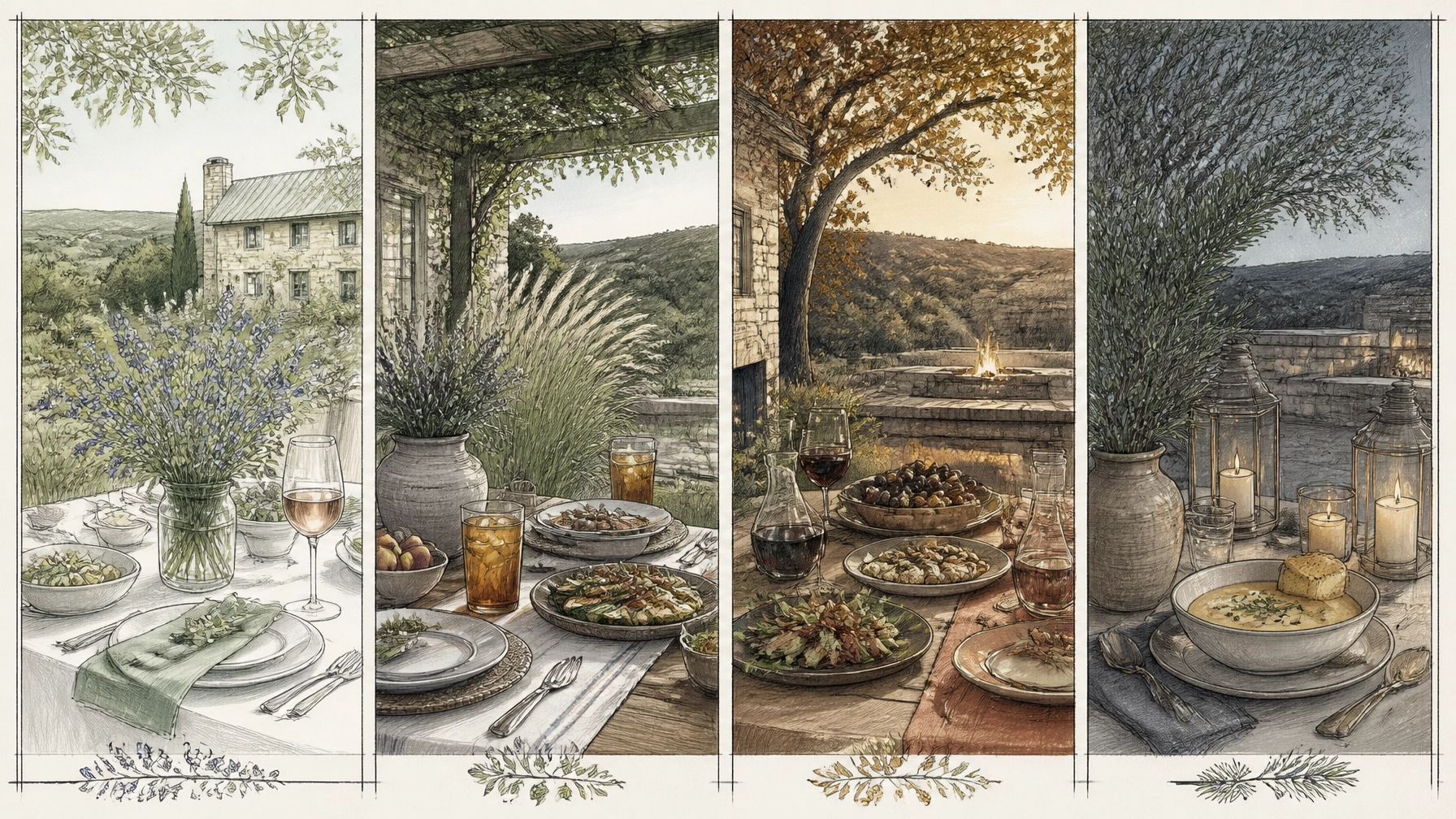
In the Texas Hill Country, entertaining at home is less about creating one perfect outdoor space and more about knowing how to use it throughout the year.
A limestone terrace that feels ideal in April may need deep shade and chilled drinks in July. A broad lawn that welcomes guests in September may give way to a covered patio and fire feature by January. The most enjoyable homes are not simply beautiful: they make it easy to adapt to the season.
For retirees and pre-retirees designing a lifestyle in the Hill Country, hosting can become part of the rhythm of the year: wildflower lunches in spring, twilight suppers in summer, harvest dinners in fall, and intimate fireside gatherings in winter.
The region generally experiences mild winters, hot summers, and especially comfortable spring and fall conditions. Spring and fall can also bring shifting weather, while summer temperatures may reach the triple digits. That makes a quarterly approach especially useful when planning menus, seating, shade, lighting, and guest comfort. Lonely Planet’s Texas Hill Country guide offers a helpful overview of the region’s seasonal patterns, wineries, waterways, and outdoor culture.
First Quarter: Winter Fires and Flexible Gatherings
January through March
Winter hosting in the Hill Country is about creating warmth without assuming the weather will cooperate all day. Daytime temperatures can be pleasant, but cold nights, freezes, ice, and occasional unusual weather still deserve a place in the plan.
The best winter gatherings are flexible. Set the main meal inside or in a covered area, then create an outdoor moment around a properly installed fireplace, fire bowl, or chiminea. Keep the fire feature far enough from furniture, trees, and table linens, and follow local safety guidance. The goal is atmosphere: not an obstacle course for guests carrying plates.
Winter menu direction
Choose food that can hold well and serve comfortably:
- Texas-style chili with multiple garnishes
- Braised short ribs or slow-cooked chicken
- Roasted root vegetables
- Warm cornbread or rustic bread
- Pecan bread pudding, baked apples, or preserved peach crumble
- Coffee, hot cider, and a small selection of Hill Country wines
Preserved summer ingredients can bring a welcome reminder of warmer months. Peach jam, pickled vegetables, and local honey work beautifully in winter appetizers and desserts.
Guest comfort details
Place wool throws over the backs of chairs and keep a small basket of extra wraps near the door. Use weather-resistant rugs to soften stone patios, and position seating close enough for conversation without crowding the fire.
Lighting matters as daylight fades early. Combine candles or lanterns with discreet pathway lighting so guests can move easily between the kitchen, patio, and parking area.
Winter is also an excellent season for a smaller guest list. A dinner for six to ten people often feels more natural than a large open house, especially when the evening moves between rooms.

Second Quarter: Spring Tables Among the Wildflowers
April through June
Spring is the Hill Country’s most naturally decorative season. Bluebonnets and other wildflowers bring color to the landscape, while mild temperatures invite garden lunches, patio dinners, and relaxed wine gatherings.
The region’s spring weather can change quickly, particularly during the wetter months. A covered porch, pergola, or nearby indoor dining area gives you room to respond without abandoning the occasion.
Spring menu direction
Keep the menu bright and relatively light:
- Herb-marinated chicken or grilled fish
- Spring greens with radishes, herbs, goat cheese, and pecans
- Charred asparagus or seasonal vegetables
- Fresh bread with local honey or compound butter
- Lemon cake, berries, or a lavender-infused dessert
- Chilled white wine, rosé, sparkling water, and iced herbal tea
Fresh herbs are especially useful for a spring table because they serve as both ingredients and decoration. Rosemary, thyme, oregano, and sage can be clipped from containers near the kitchen or arranged in small bud vases.
For the table, use low floral arrangements so guests can see one another. Bluebonnet-inspired tones, pale greens, soft whites, and natural pottery create a Hill Country look without making the setting feel overly themed.
Spring shade and weather planning
Spring shade is usually about flexibility rather than maximum protection. A retractable shade system, pergola, or large umbrella can soften afternoon sun, while a covered dining area provides a practical retreat if a shower passes through.
Keep table coverings and centerpieces secure. Spring breezes can turn lightweight napkins, menus, and serving pieces into distractions. Favor heavier linen, ceramic vessels, and simple place settings.
A useful spring format is the “open-house supper”: serve a few dishes over a two-hour window, allowing guests to arrive, explore the garden, and settle where they are most comfortable.

Third Quarter: Summer Shade, Water, and Twilight
July through September
Summer hosting requires the most deliberate planning. With average summer highs in the Austin and San Antonio areas commonly reaching the 90s: and some days exceeding 100°F: mid-afternoon entertaining can quickly become uncomfortable. Regional climate information provides useful perspective on temperatures, rainfall, freezes, and the differences among Hill Country microclimates.
Move the gathering to early morning or evening. A breakfast on the shaded porch, a late lunch by the pool, or a twilight dinner can feel relaxed and luxurious without asking guests to endure the hottest part of the day.
Summer menu direction
Lean into produce associated with the Hill Country:
- Fredericksburg or Stonewall peaches
- Tomatoes, cucumbers, basil, and melons
- Grilled corn with chili-lime butter
- Smoked brisket, grilled sausages, or lighter barbecue fare
- Peach and tomato salad
- Grilled peaches with vanilla ice cream
- Agua fresca, iced tea, sparkling water, and chilled wine
Peach season typically runs from late spring into summer, with peak availability often occurring from June into July, depending on weather and growing conditions. Visit Fredericksburg’s guide to peach season is a useful starting point for planning an orchard stop or sourcing regional fruit.
Summer shade and guest comfort
Create a dedicated hydration station with still water, sparkling water, iced tea, and chilled towels. Place beverages where guests can serve themselves without crossing the food-preparation area.
Use native or well-adapted plants such as cenizo, esperanza, lantana, salvia, and ornamental grasses to frame the patio. Their textures add visual interest without requiring elaborate seasonal décor.
Fans, ceiling fans, and thoughtful furniture placement can make a meaningful difference. Arrange chairs so guests benefit from moving air, and avoid placing the dining table where reflected heat from stone or concrete is strongest.
When the sun goes down, shift the mood with lanterns, low lighting, and music at a comfortable volume. Summer entertaining should feel unhurried: but the schedule should be intentional.

Fourth Quarter: Fall Harvest and Firelight
October through December
Fall is often the easiest season for outdoor entertaining. Temperatures moderate, the landscape takes on warmer tones, and cooler evenings make a fire feature feel inviting rather than merely decorative.
This is the season for a longer meal. Guests can arrive before sunset, enjoy drinks outdoors, move to the table as the light changes, and gather near the fire after dessert.
Fall menu direction
Build the meal around richer textures:
- Smoked pork, roast chicken, or braised beef
- Roasted squash and sweet potatoes
- Greens with pecans and citrus vinaigrette
- Seasonal breads and savory spreads
- Apple-pecan crisp or spiced cake
- Medium-bodied Texas reds or full-flavored whites
A family-style menu works particularly well in fall. Large serving platters create a generous feeling while allowing the host to spend less time managing individual courses.
For the table, use live oak leaves, native grasses, seed pods, autumn sage, or asters in simple arrangements. Rust, copper, deep green, and cream add seasonal character without defaulting to generic autumn décor.
Fall fire features and seating
A fire feature can anchor the evening, but it should not become the only source of warmth or light. Provide comfortable seating nearby and maintain a clear circulation path around the fire.
As daylight shortens, add lanterns along paths and steps. Check the forecast before setting the table outdoors; fall can bring rain as well as beautifully clear evenings. A covered terrace or indoor backup should remain part of the plan.
One elegant fall format is the Hill Country harvest supper: welcome guests with wine and small bites, serve one substantial meal, and finish with coffee or dessert around the fire.

A Quarterly Hosting Checklist
Before each gathering, consider five questions:
- What will the weather feel like at the actual gathering time: not just the daily high?
- Where will guests find shade, warmth, water, and comfortable seating?
- Can the meal move indoors without creating unnecessary stress?
- Which local ingredient, wine, plant, or craft detail gives the gathering a sense of place?
- Will the host be able to enjoy the occasion, or is the plan too complicated?
Julia Child is often credited with writing, “You don’t have to cook fancy or complicated masterpieces: just good food from fresh ingredients.” The attribution is widely circulated, though the exact source is not always clear; the principle remains well suited to Hill Country hosting. Taste of Home discusses the quote and its attribution.
The finest entertaining spaces are not necessarily the largest. They are the ones that make seasonal living easy: shade where summer demands it, warmth when winter arrives, flexible seating when the forecast changes, and a table that invites people to stay awhile.
For families considering the Hill Country as a retirement destination, these everyday details can be just as meaningful as a home’s square footage. Readers who want individualized guidance on how lifestyle priorities, housing choices, or broader financial considerations may fit into a retirement plan should consult qualified professionals, including a tax professional for tax-specific questions.
Schedule a private meeting with a fiduciary financial advisor today by calling (512) 593-8380 or by visiting: https://calendly.com/portafoliocapital/15min
Portafolio Capital Management dba Mau Sanchez Capital is a Registered Investment Adviser. This content is for informational purposes only and does not constitute investment advice or a solicitation to buy or sell any security. Advisory services are provided only pursuant to a written advisory agreement.
This article may include stories, scenarios, and perspectives created or assisted by artificial intelligence. Although the individuals and circumstances described may be fictional, the topics are intended to reflect real financial, personal, and lifestyle issues that retirees and individuals commonly face.
The content is provided to encourage readers to consider different perspectives that may affect their retirement, regardless of whether they are currently planning, approaching retirement, or already retired. It is intended for general educational and informational purposes only and should not be interpreted as personalized investment, financial, tax, legal, medical, or retirement-planning advice.
Individual circumstances vary. Readers should independently verify any information presented and consult appropriately qualified professionals before making financial or personal decisions. No advisory, professional, or client relationship is created through the use of this website.
Leave a Reply