
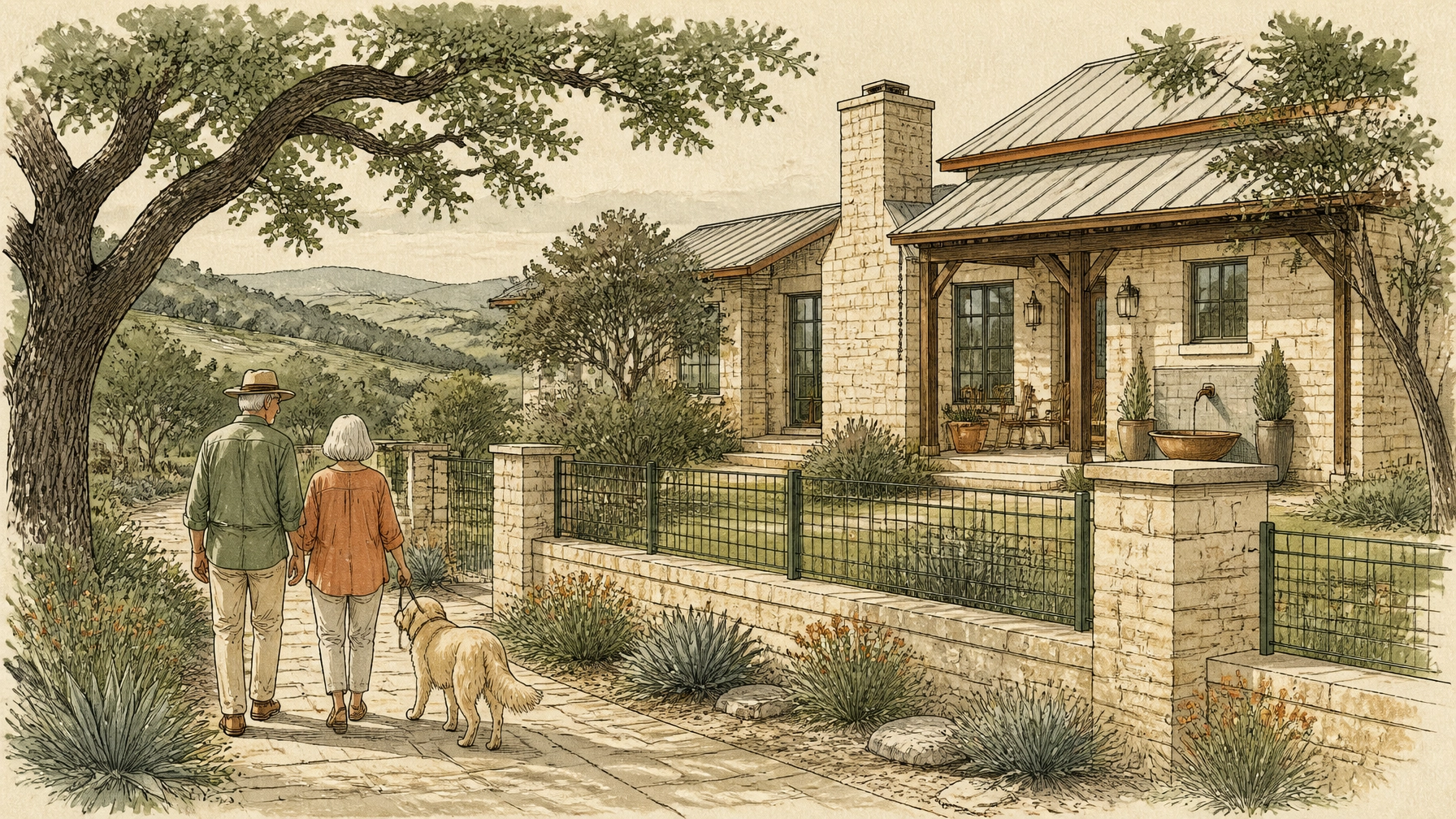
Retiring in the Texas Hill Country with a dog can be wonderfully rewarding. Mornings may begin beneath live oaks, afternoons can include a shaded town walk, and weekends might bring a dog-friendly patio, a country road, or a quiet cabin near the water.
But relocating with a dog requires more than finding a beautiful home. The right property, town, and daily routine should also support your dog’s safety, comfort, mobility, and care needs.
For affluent retirees choosing between a luxury home, a gated neighborhood, a smaller 55+ community, or a more rural setting, pet logistics deserve a place near the top of the relocation checklist.
Start With the Property, Not Just the Floor Plan
A home that looks ideal from the veranda may not be ideal for a dog.
Before falling in love with a Hill Country property, walk the entire perimeter and look for practical details:
- Is the yard fully enclosed, or are there open sections along the driveway?
- Are gates self-closing and securely latched?
- Could a small dog slip beneath the fence?
- Are there drainage channels, rock walls, culverts, or steep drop-offs?
- Is there shade in the yard throughout the day?
- Can the dog move easily between the house, yard, and shaded resting areas?
For many dogs, a secure fence made from smooth materials or appropriately spaced welded wire is more practical than barbed wire. A tall fence may be appropriate for athletic or easily distracted dogs, but the correct height depends on the dog, terrain, neighborhood rules, and local wildlife.
A large acreage property is not automatically safer. An unfenced dog can travel farther than expected, chase deer or livestock, investigate brush, or disappear beyond the owners’ sightline. Even on a large estate, a smaller enclosed exercise area can make daily life easier.

Design a Shaded, Comfortable Outdoor Routine
Texas summers change the rhythm of life for both people and pets. A dog that happily walks at midday in a cooler climate may need a very different schedule in the Hill Country.
A comfortable property should include:
- Reliable shade from mature trees, covered patios, or thoughtfully placed structures
- Fresh drinking water that is easy to access
- A cool indoor retreat with dependable air conditioning
- Grass, soil, or shaded paths instead of an all-pavement route
- A place to rinse muddy paws after rain or cool off after outdoor activity
The American Veterinary Medical Association’s warm-weather guidance emphasizes access to fresh water and shade, limiting heat exposure, and never leaving pets in parked vehicles.
A practical rule for summer walks is to go early in the morning or later in the evening. On especially hot days, a shorter walk followed by indoor enrichment may be better than a long outing.
Older dogs, overweight dogs, short-nosed breeds, and dogs with heart or respiratory conditions may be more vulnerable to heat. Watch for heavy panting, excessive drooling, weakness, confusion, vomiting, or reluctance to continue. If you suspect heatstroke, move your dog to a cool area and seek veterinary care promptly.
“Never, ever leave your pet in a parked car.” , American Veterinary Medical Association
Pay Attention to Walking Surfaces
The Hill Country’s natural beauty often comes with limestone, gravel, uneven rock, and exposed trails. These surfaces can be enjoyable, but they may be difficult for a senior dog or a dog with joint sensitivity.
When evaluating a neighborhood or retirement community, consider whether your everyday route includes:
- Smooth, shaded sidewalks
- Packed dirt or maintained walking paths
- Steep limestone steps
- Loose gravel
- Rough rock ledges
- Hot asphalt or concrete
- Areas with little shade
Before walking on pavement in warm weather, test the surface with your hand. If it is too hot for you to hold comfortably for several seconds, it is too hot for your dog’s paws.
For older dogs, a gently graded path near home may be more valuable than access to a dramatic hiking trail. A loop that can be shortened easily gives you flexibility as your dog’s energy and mobility change.
Booties or paw balm may help in some situations, but they should not be treated as permission to exercise during peak heat. Surface temperature, duration, shade, and the dog’s condition all matter.
Respect Wildlife and Rural Neighbors
Dogs moving from an urban or suburban setting may encounter a very different landscape in the Hill Country. Deer, livestock, snakes, coyotes, and feral hogs can all be part of the regional environment.
That does not mean rural living is unsuitable for dogs. It means supervision and boundaries become more important.
Keep dogs leashed near livestock, wildlife, and unfamiliar properties. Do not allow them to investigate brush piles, rock crevices, or tall grass without supervision. At night, use a leash or enclosed yard rather than assuming a dog will stay close to the house.
Texas Parks and Wildlife Department rules require pets in most state parks to be controlled, generally by leash, vehicle, or crate. The department also advises that pets may not approach wildlife and that owners carry proof of current rabies vaccination. Before visiting a specific park, review the official Texas State Parks rules, since individual parks may have additional restrictions.
Map Veterinary Care Before You Move
Veterinary access is one of the most important relocation questions for dog owners, particularly when moving with a senior pet.
Before closing on a home, identify:
- A primary-care veterinarian within a reasonable driving distance
- The nearest emergency animal hospital
- A clinic that can manage medications, mobility issues, or chronic conditions
- Whether mobile veterinary services operate in your area
- The driving route and expected travel time during an emergency
The Hill Country includes smaller towns and more rural areas, so emergency care may require a drive toward Austin, San Antonio, Boerne, or another regional center. Hill Country Animal Emergency is one example of a dedicated emergency resource in the Boerne area. Emergency hours and intake procedures can change, so confirm current details directly.
Ask your current veterinarian for complete records before relocating. Keep vaccination information, medication instructions, microchip details, and a recent photo in both paper and digital form.

Build a Boarding and Pet-Sitting Plan Early
Retirement often creates more freedom to travel, but not every winery, resort, family gathering, or vacation rental will accommodate a dog.
A reliable local care plan can include:
- A trusted boarding facility
- An in-home pet sitter
- A neighbor or family backup
- A caregiver authorized to approve emergency treatment
- A written routine covering food, medication, exercise, and comfort preferences
In the Wimberley area, Hill Country Pet Sitting is listed as offering home boarding, daily visits, and special care for senior dogs. This is the kind of service to investigate before you need it: not the day before a trip.
Visit potential providers in person. Look for climate-controlled indoor spaces, secure outdoor areas, medication administration, senior-dog experience, and clear emergency procedures. A short trial stay can help you determine whether your dog is comfortable before planning a longer trip.
Read Pet Policies Before Choosing a Community
Pet-friendly does not always mean every dog, every size, or every number of pets is accepted.
Rules can cover:
- Maximum number of pets
- Weight limits
- Breed restrictions
- One-time or recurring fees
- Fencing requirements
- Leash expectations
- Areas where pets may not go
- Requirements for cleanup and vaccinations
For example, Woodland Cottages’ published pet policy states that up to two pets are welcome per home, with a 30-pound limit per pet and a one-time fee. Policies like this are community-specific, not universal, but they demonstrate why written confirmation matters.
Ask for the current rules before making a deposit. If you are purchasing in a gated community or neighborhood with an owners’ association, review both the community’s pet policy and any architectural guidelines affecting fencing, dog doors, landscaping, or outdoor enclosures.
Create a Travel Routine That Works in Every Season
A Hill Country lifestyle may include drives to Fredericksburg, Boerne, Wimberley, Kerrville, or Austin. Your dog’s travel routine should be as deliberate as your own.
Keep a small travel kit in the vehicle with:
- Fresh water and a collapsible bowl
- Leash and backup leash
- Waste bags
- Towel
- Medication
- Current vaccination information
- Basic first-aid supplies
- Contact information for your veterinarian
Plan stops where your dog can rest in shade and drink water. Never leave a dog unattended in a vehicle, even with windows open or the car parked in shade.
For day trips, call ahead to confirm pet policies at restaurants, wineries, parks, and lodging. Outdoor patios may welcome leashed dogs, while buildings, designated swim areas, or particular trails may not.

A Dog-Friendly Move Is a More Thoughtful Move
The best Hill Country home for you and your dog may not be the largest or most secluded. It may be the one with a secure yard, practical walking surfaces, dependable shade, a manageable drive to veterinary care, and a community whose rules fit your household.
Before you move, spend time in your preferred town during warm weather. Walk the routes at different times of day. Visit a veterinarian, inspect boarding options, test the drive to emergency care, and ask housing representatives for written pet policies.
For more lifestyle and relocation resources, explore Texas Hill Country Retirement. With the right preparation, your dog can enjoy the slower pace, open skies, shaded trails, and small-town warmth that make the region such a special place to call home.
Schedule a private meeting with a fiduciary financial advisor today by calling (512) 593-8380 or by visiting: https://calendly.com/portafoliocapital/15min
Portafolio Capital Management dba Mau Sanchez Capital is a Registered Investment Adviser. This content is for informational purposes only and does not constitute investment advice or a solicitation to buy or sell any security. Advisory services are provided only pursuant to a written advisory agreement.
This article may include stories, scenarios, and perspectives created or assisted by artificial intelligence. Although the individuals and circumstances described may be fictional, the topics are intended to reflect real financial, personal, and lifestyle issues that retirees and individuals commonly face.
The content is provided to encourage readers to consider different perspectives that may affect their retirement, regardless of whether they are currently planning, approaching retirement, or already retired. It is intended for general educational and informational purposes only and should not be interpreted as personalized investment, financial, tax, legal, medical, or retirement-planning advice.
Individual circumstances vary. Readers should independently verify any information presented and consult appropriately qualified professionals before making financial or personal decisions. No advisory, professional, or client relationship is created through the use of this website.
Leave a Reply