
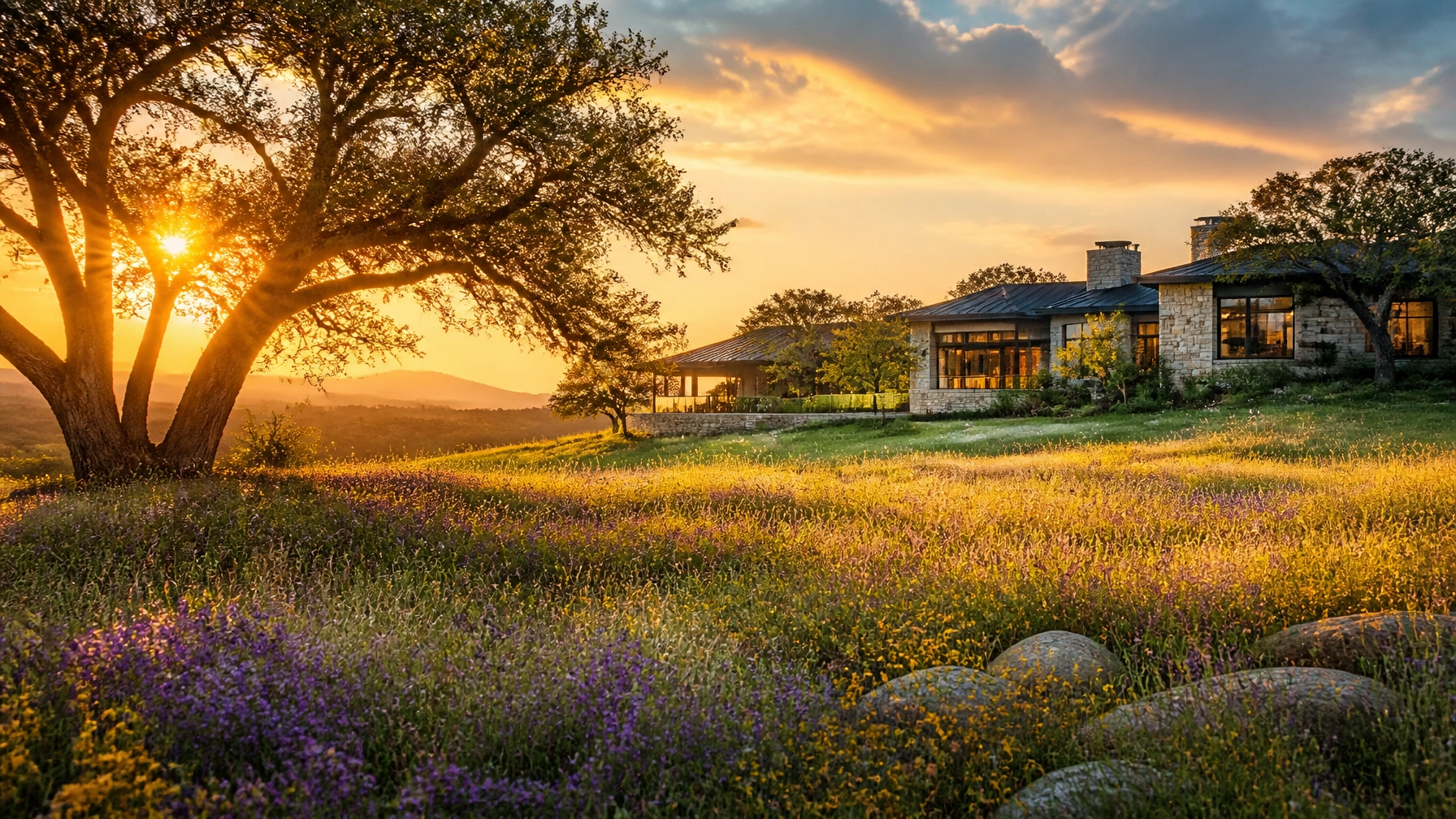
There is a specific kind of magic that happens when you first stand on your own piece of the Texas Hill Country. Whether it’s a twenty-acre "ranchette" outside of Wimberley or a sprawling multi-hundred-acre estate near Fredericksburg, the feeling is the same: it’s a sense of arrival. But for the modern retiree moving to this region in 2026, that feeling is quickly followed by a new, more profound realization.
Owning land here isn’t just about the view; it’s about the stewardship.
As more executives and families relocate from bustling hubs to find a nature-focused retirement living experience, a new movement is taking root. We call it Sustainable Stewardship. It’s the transition from being a simple property owner to becoming a guardian of the land’s legacy.
In this guide, we’ll explore how today’s luxury landowners are partnering with local organizations, utilizing federal conservation programs, and making strategic financial decisions to ensure their piece of Texas remains wild, healthy, and beautiful for generations to reach.
The New Guard of Hill Country Landowners
For decades, the Hill Country was defined by large-scale traditional ranching. Today, the landscape is shifting. Many of the newest landowners are retirees coming from the C-suite or successful business backgrounds. They bring with them a project-management mindset and a deep desire to give back to the environment that drew them here in the first place.
This "New Guard" isn't interested in over-developing. Instead, they are looking for ways to restore native grasses, protect the Edwards Aquifer recharge zones, and create habitats for local wildlife like the Golden-cheeked Warbler. This shift toward the new ranch life is as much about personal fulfillment as it is about environmental impact.

2026 Conservation Opportunities: The "Regenerative" Pilot
One of the most exciting developments for landowners in 2026 is the expansion of federal and state support for conservation. The USDA Natural Resources Conservation Service (NRCS) has launched specific initiatives aimed at private landowners.
For those looking to be proactive this year, the Conservation Stewardship Program (CSP) is a primary vehicle. In fact, NRCS Texas has established a batching period for 2026 applications, with a significant focus on the Regenerative Pilot Program. This program offers financial and technical assistance to landowners who implement whole-farm or whole-ranch regenerative practices.
If you’ve recently acquired land, these programs can help offset the costs of:
- Brush Management: Safely removing invasive species like cedar (Ashe juniper) to allow native grasses to thrive and springs to flow.
- Erosion Control: Implementing low-tech structures to slow down rainwater runoff, which is critical in our rocky terrain.
- Wildlife Habitat Enhancements: Tailoring your acreage to support specific native species.
Tip: If you're planning for 2026, the application deadline for many of these cost-share programs often falls in late spring, so early planning with a professional is key.
Protecting the "Lifeblood" of the Hills: Riparian Stewardship
If your property includes a creek, a seasonal draw, or river frontage along the Guadalupe or Llano, you are a literal gatekeeper of Texas water quality. "Riparian areas": the green zones along water edges: are the most ecologically diverse and sensitive parts of the Hill Country.
The Hill Country Alliance (HCA) is a fantastic resource for landowners in this category. They emphasize that healthy riparian vegetation acts as a natural filter for our aquifers. By managing these zones correctly: avoiding over-clearing and planting native "riparian" species: you aren't just beautifying your backyard; you’re protecting the region’s water supply.

The Financial Strategy of a "Legacy Estate"
From a retirement planning perspective, land conservation is more than a hobby: it’s a sophisticated financial decision. While we don't provide tax advice, it’s important for landowners to understand how stewardship can align with their overall strategic wealth protection goals.
1. Conservation Easements
A conservation easement is a voluntary legal agreement that permanently limits certain types of development to protect the land’s natural value. For high-net-worth families, an easement can be a powerful tool to ensure their property isn't subdivided in the future, while potentially offering significant financial planning advantages. Organizations like the Texas Hill Country Conservation Network help connect landowners with land trusts that specialize in these agreements.
2. Wildlife Management Valuations
In Texas, many landowners transition their traditional agricultural (Ag) valuation to a Wildlife Management valuation. This allows you to maintain lower property tax valuations by actively managing your land for wildlife rather than livestock. It’s a popular choice for retirees who want the "ranch" lifestyle without the logistical burden of a full-scale cattle operation.
3. Long-Term Appreciation
As the Hill Country continues to grow, "unspoiled" land becomes increasingly rare. Properties that have been professionally managed for health and beauty: featuring restored prairies, healthy oak motts, and flowing springs: often command a premium in the luxury market.
Xeriscaping and Native Design: Luxury Meets Sustainability
Stewardship doesn't stop at the fence line of your back pasture; it starts at your front door. Many luxury homes in new conservation-minded developments, such as Mirasol Springs, are setting the standard for "Low-Impact Living."
This includes:
- Rainwater Harvesting: Large-scale systems that can provide all the water needed for home irrigation, reducing the strain on local wells.
- Native Landscaping: Replacing thirsty Bermuda grass with Buffalo grass, Blackfoot Daisy, and Texas Sage.
- Dark Sky Preservation: Using shielded lighting to ensure that the legendary Hill Country stars remain visible for your grandkids to see.
Designing your home site with these principles in mind creates a seamless transition between your luxury living space and the wild beauty of the hills.

Starting Your Stewardship Journey
Relocating to the Hill Country is often about savoring the slow life. There is a deep satisfaction in knowing that your presence here is making the region better.
Whether you are just starting your search for the perfect ranch or you are already looking at maps of your new acreage, remember that you don't have to do it alone. The Hill Country is home to a robust network of biologists, land stewards, and financial professionals who specialize in this unique landscape.
Schedule a call with a fiduciary financial advisor today: https://calendly.com/portafoliocapital/15min
Portafolio Capital Management dba Mau Sanchez Capital is a Registered Investment Adviser. This content is for informational purposes only and does not constitute investment advice or a solicitation to buy or sell any security. Advisory services are provided only pursuant to a written advisory agreement.
To learn more about how we help retirees align their lifestyle goals with their wealth strategies, visit us at https://portafoliocapital.com/ or give us a call at (512) 593-8380.
Leave a Reply